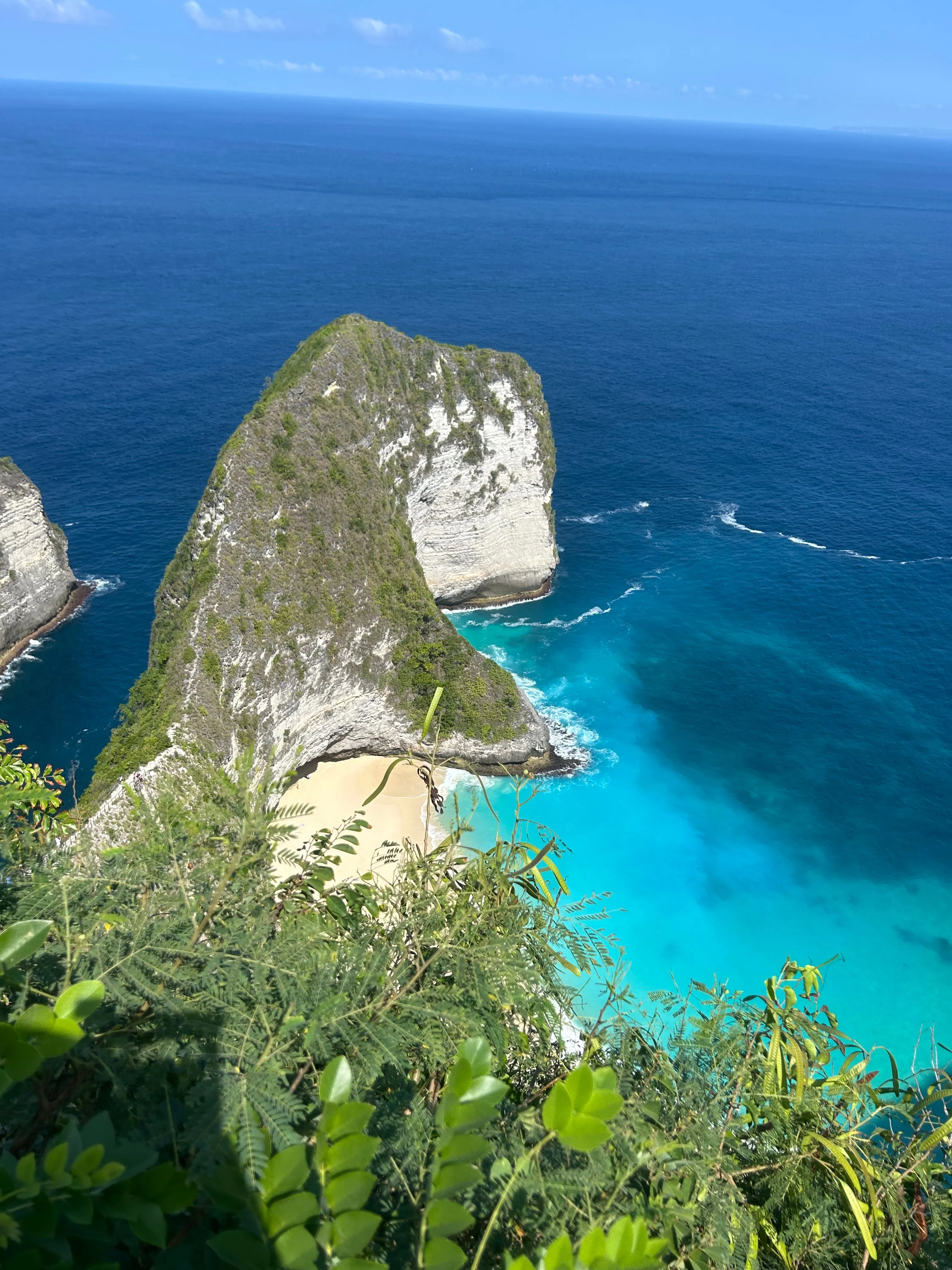
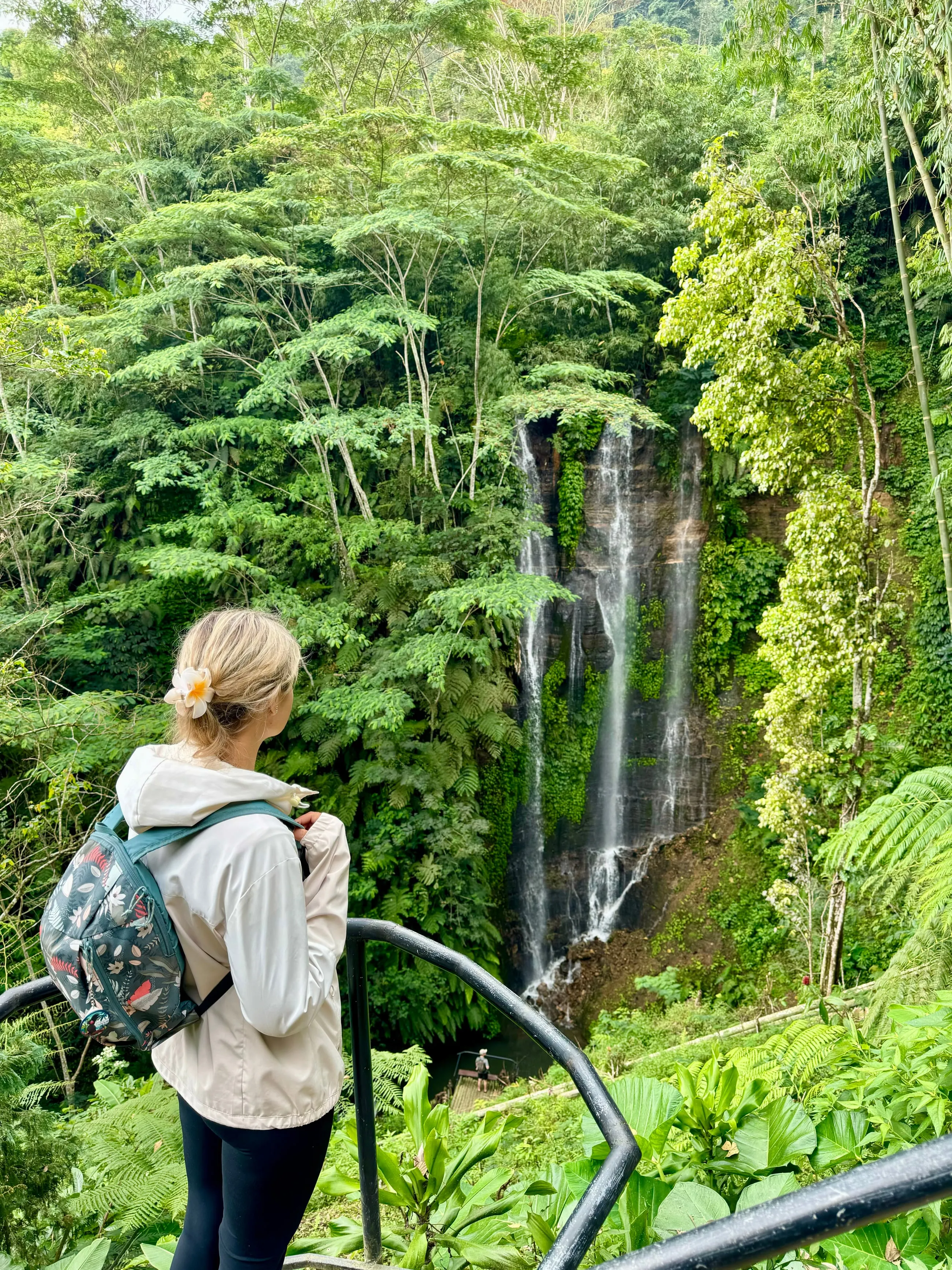
Best Beaches in Uluwatu: 6 I Swam At, and What Each One Is Like
Melasti, Pandawa, Green Bowl, Gunung Payung, Balangan and Uluwatu Temple at sunset. How to get down to each beach, when to swim and what to watch out for.
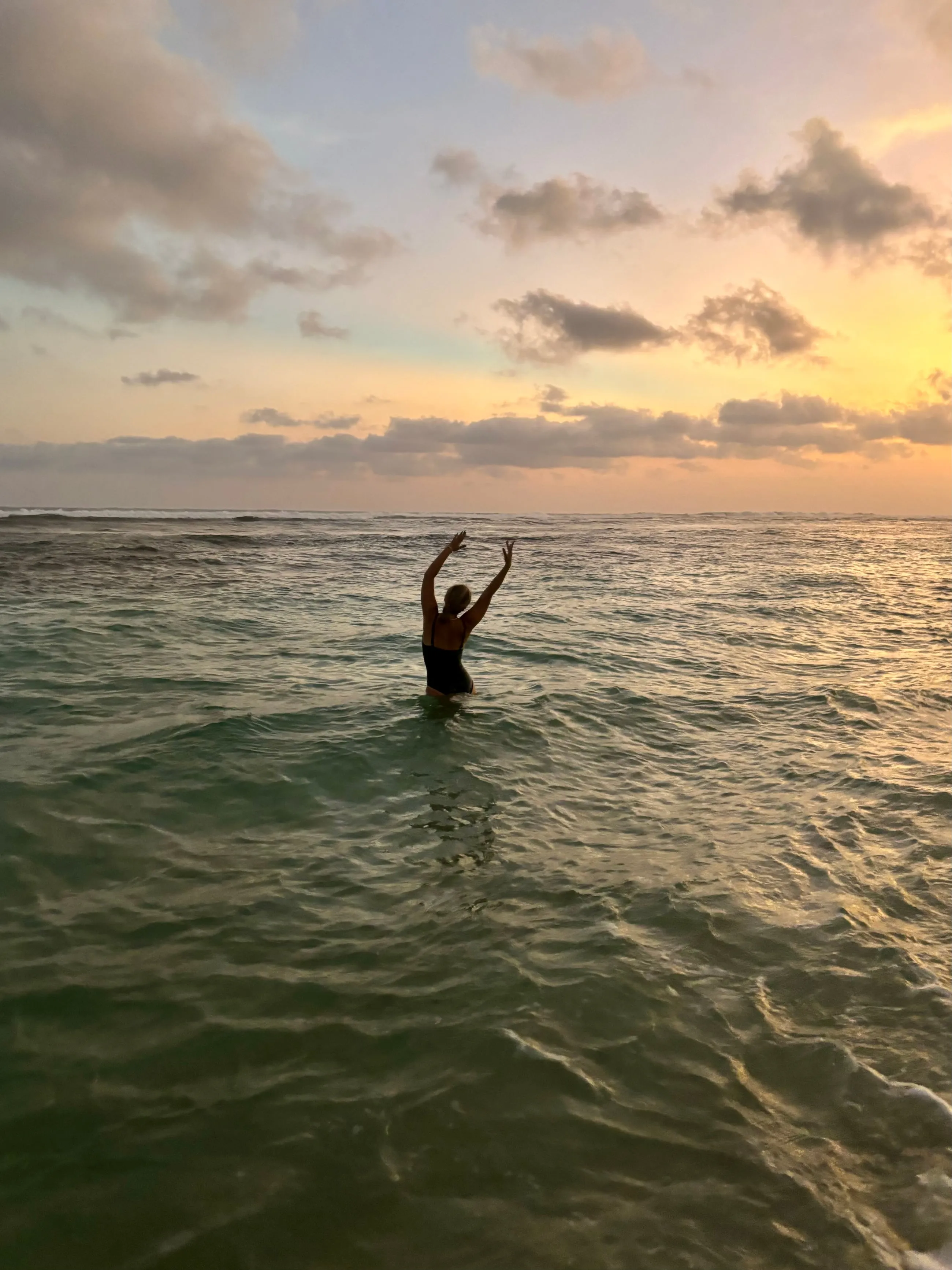
Uluwatu is the limestone peninsula at the southern tip of Bali, also called the Bukit. Instead of one long beach, it has dozens of small ones tucked under cliffs, each reached by its own road, staircase or path cut through the rock. The water is clear and turquoise, the sand is white, and the surf is some of the best in Indonesia.
I swam at every beach in this guide. They’re very different: some are calm enough to float in, some have strong waves, and on some the beach almost disappears at high tide. Here’s what each one is like and how to get down to it, from east to west.
Beaches on the south coast
These four are close together on the south side of the peninsula. You can see two or three of them in a day, with a swim at each.
1. Pandawa Beach
Pandawa is the easiest beach in Uluwatu to get to. The road down was cut straight through the cliff, and you drive between two high walls of white limestone with statues of the five Pandawa brothers from the Mahabharata set into the rock.
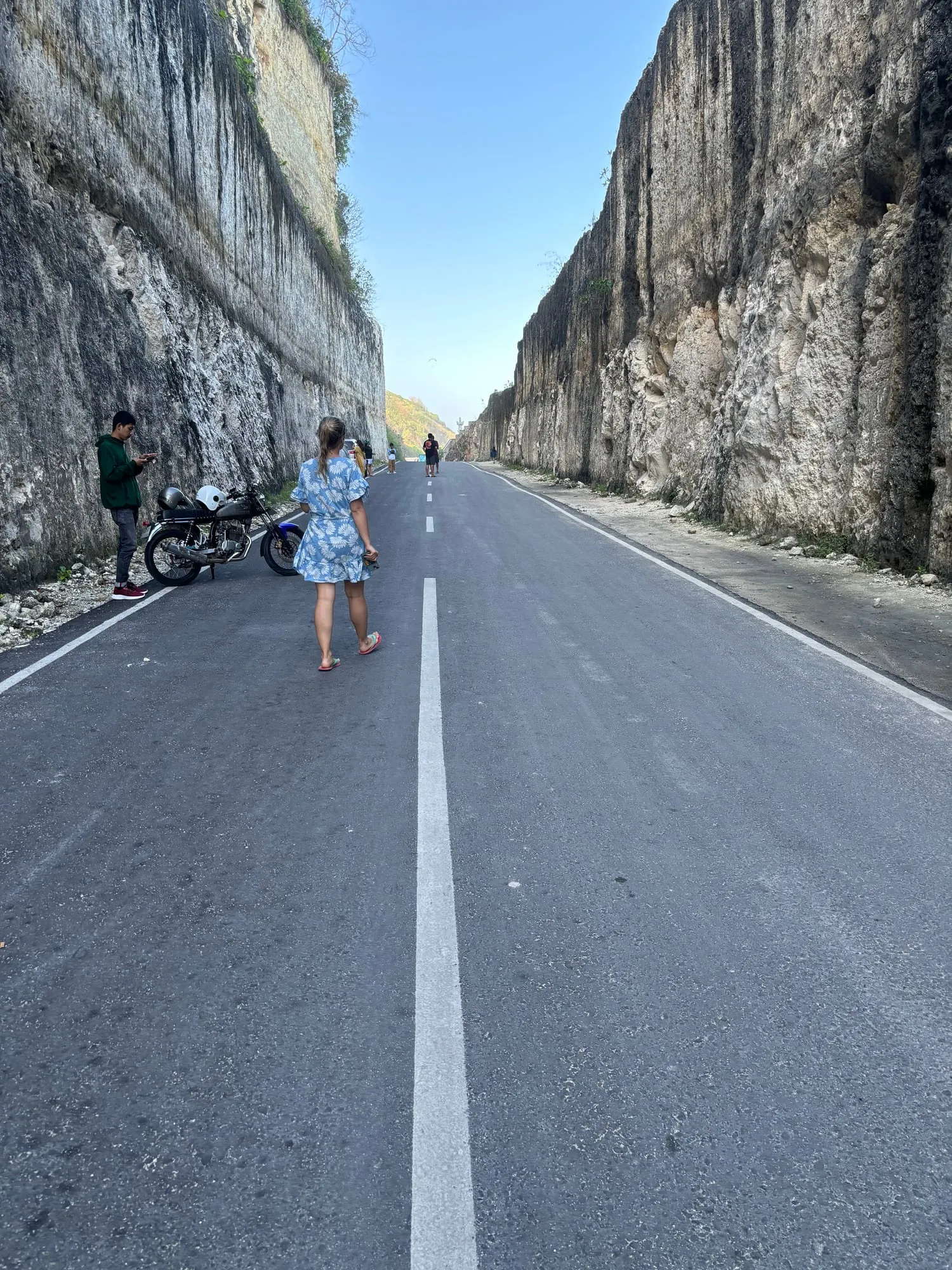
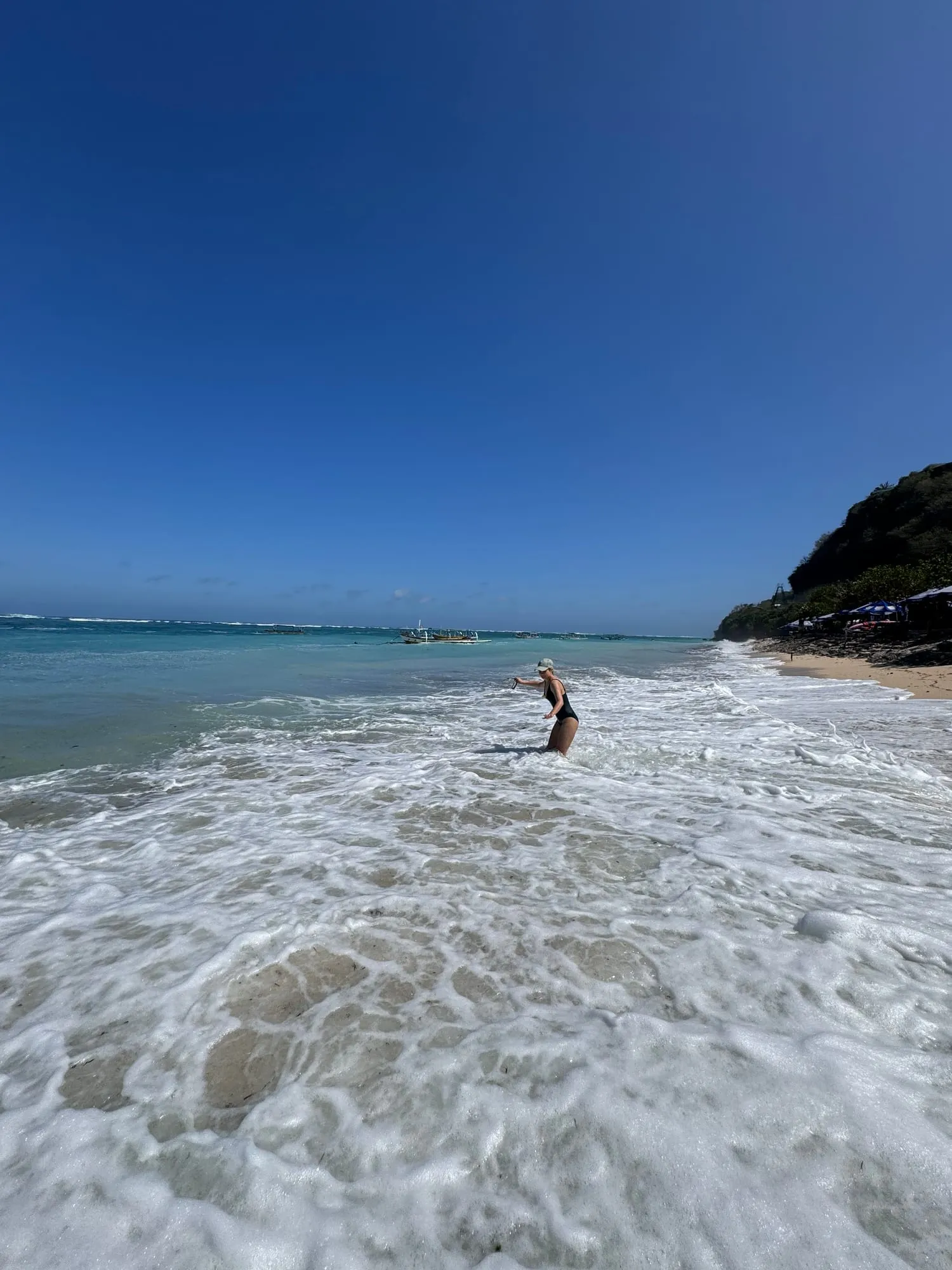
The road down to Pandawa, and the water at the bottom.
At the bottom there’s a long beach with sun loungers, umbrellas and kayaks for rent. A reef offshore takes the force out of the waves, so this is one of the calmer places to swim on the Bukit. A paved path runs along the sea at the eastern end.
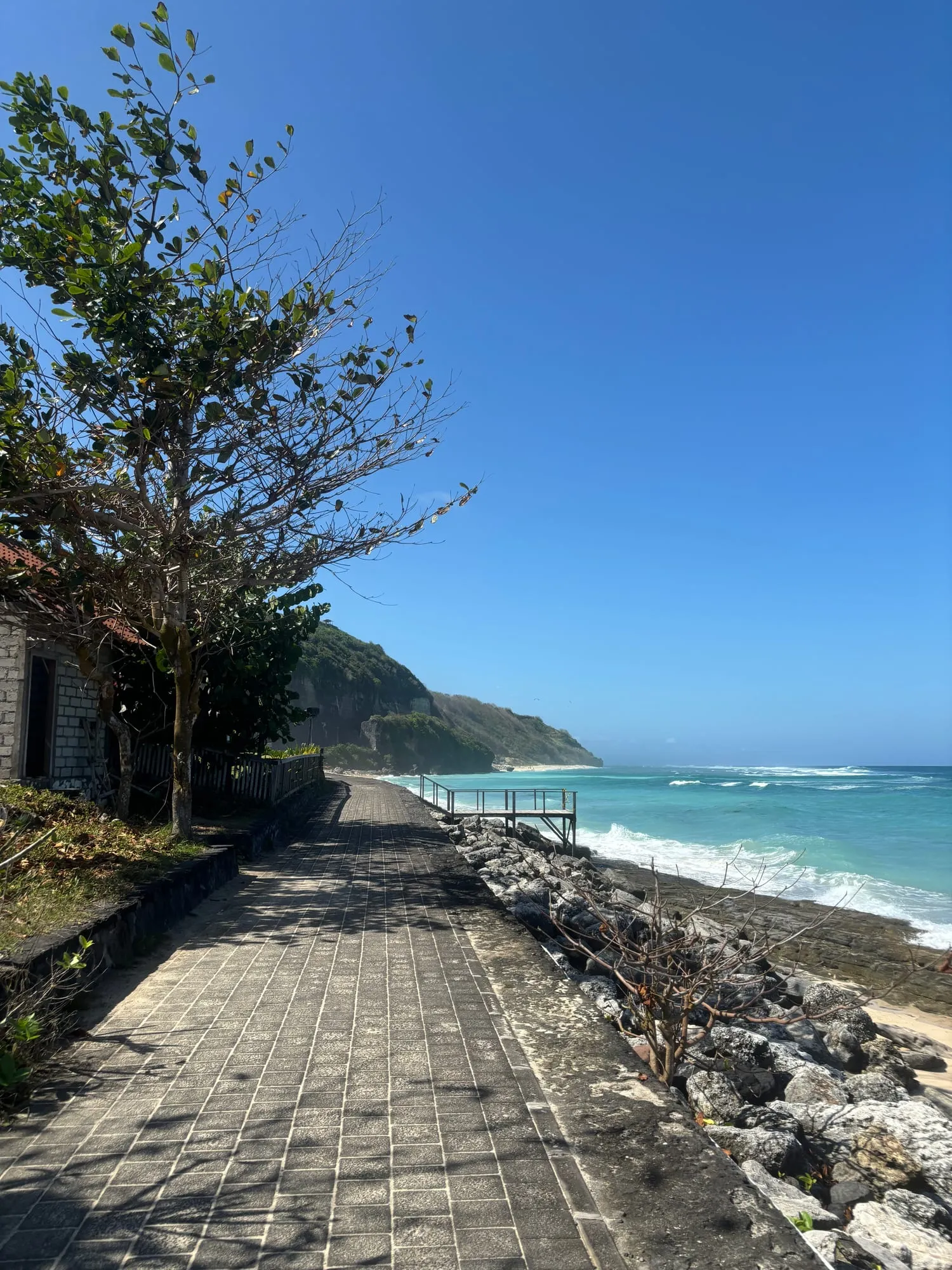
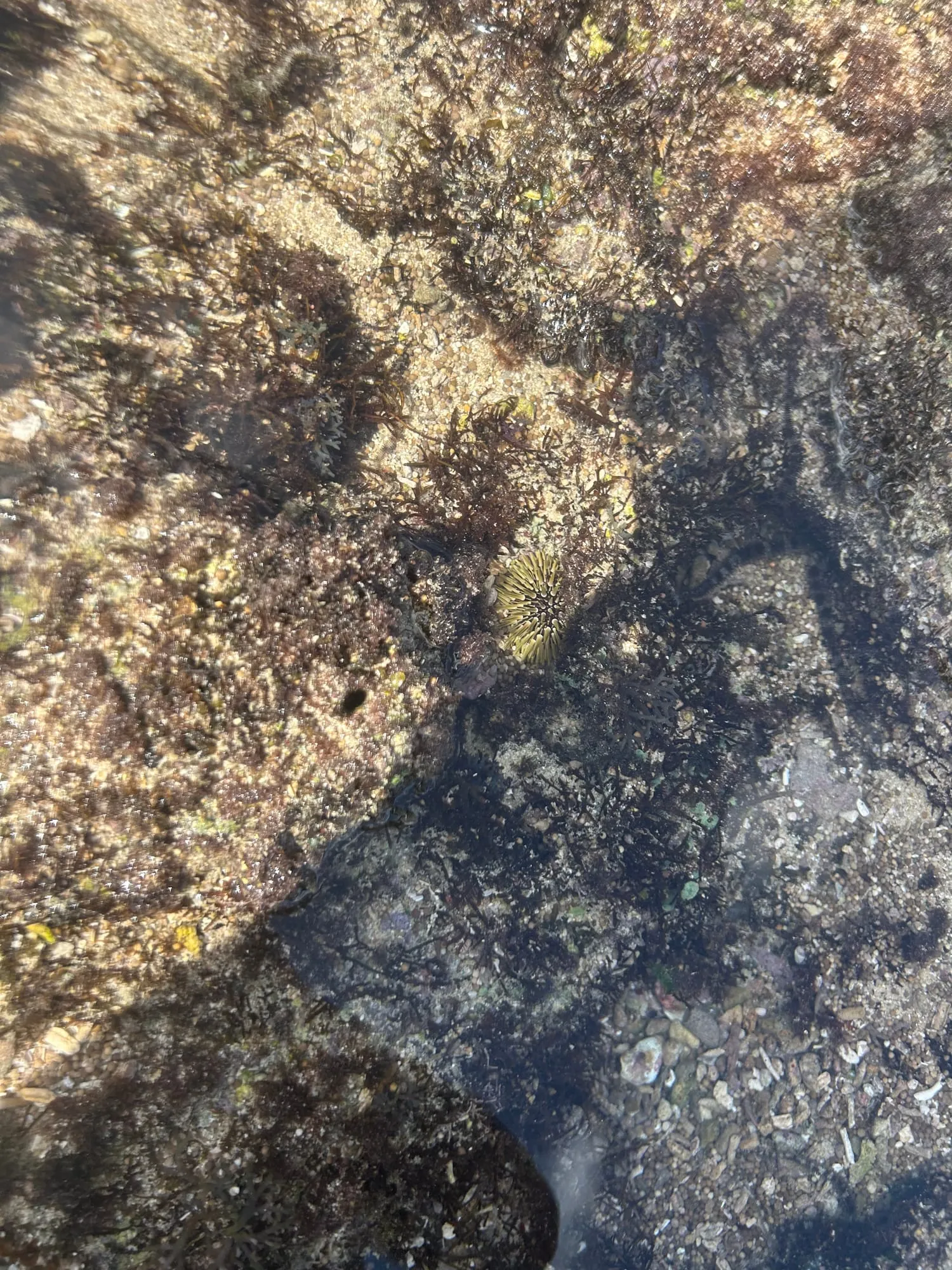
The path along the sea, and a sea urchin in the rock pools at low tide.
Good to know
- Getting there: by car or scooter all the way down to the beach. Paid parking.
- Swimming: calm at mid and high tide. At low tide the reef and rock pools are exposed; there are sea urchins, so wear reef shoes.
- Crowds: the busiest beach on this side, with tour groups by midday. The eastern end is quieter.
2. Gunung Payung Beach
Next to Pandawa, Gunung Payung is the same coastline with almost none of the people. At the top there’s a cultural park with a stone amphitheatre looking out over the sea; from there a long, steep path leads down to a small beach.
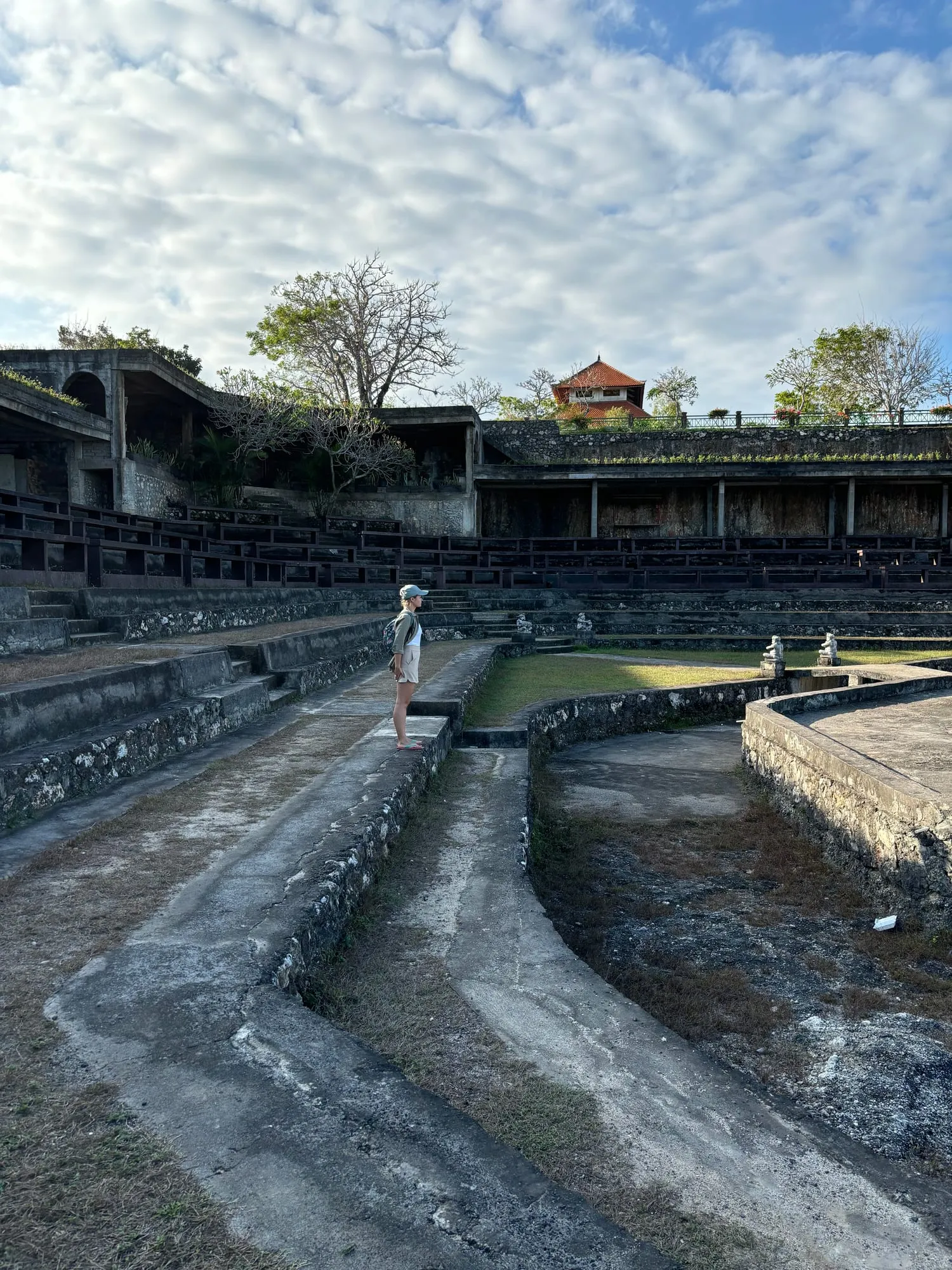
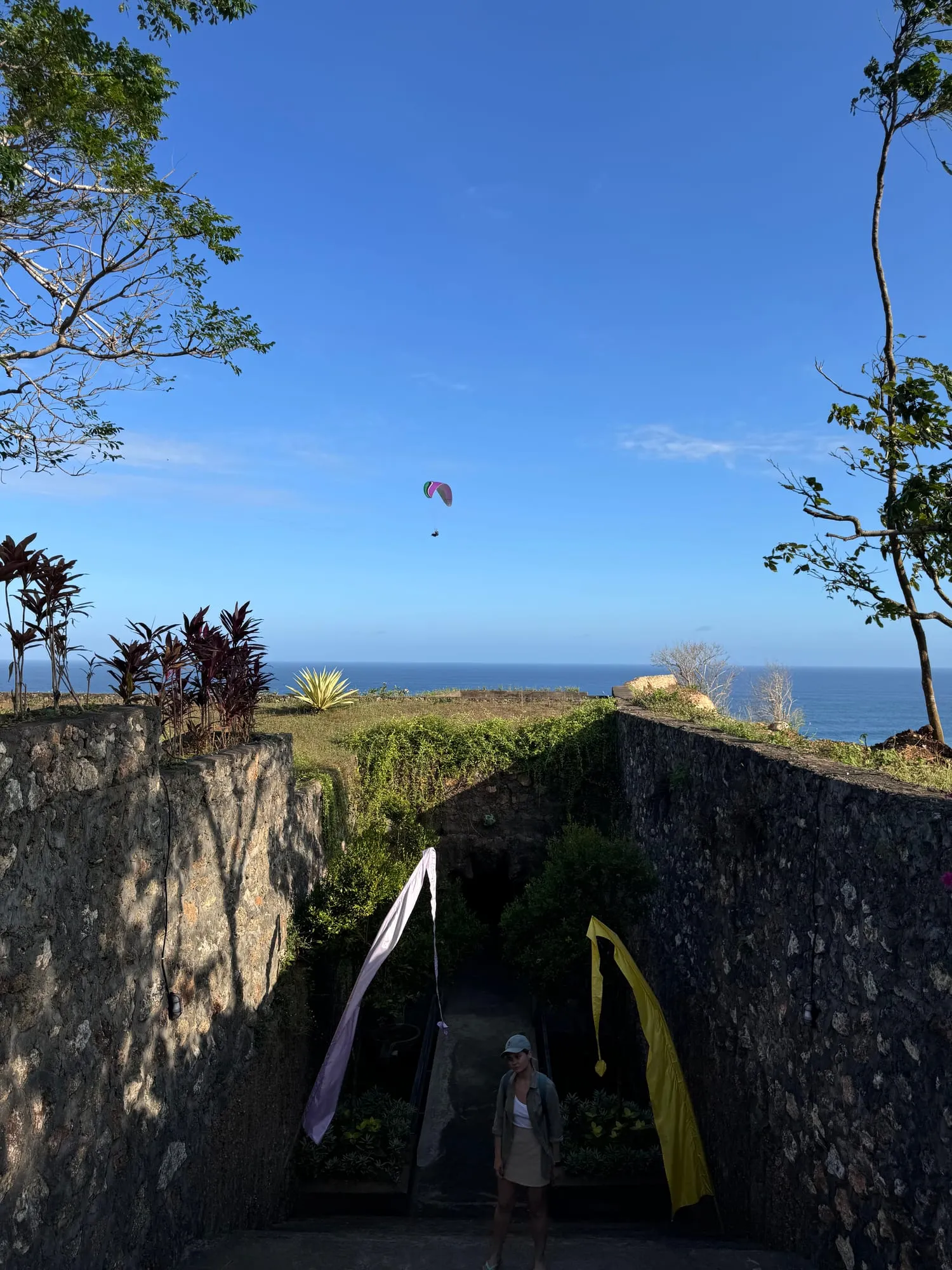
The amphitheatre at the top and the path down.
There are monkeys on the way, and they’re not shy. Keep food in your bag and your sunglasses on your face, not on your head.
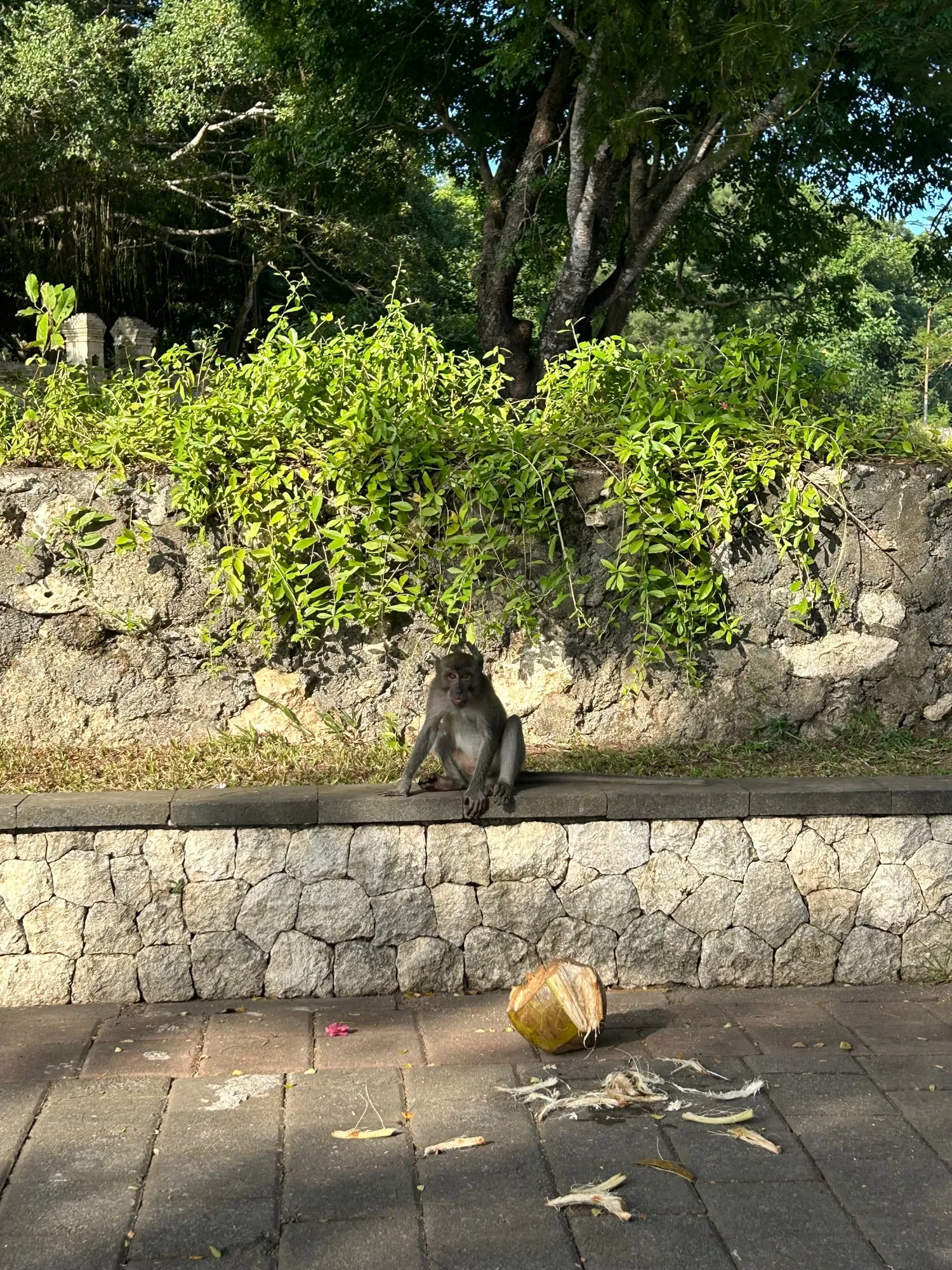
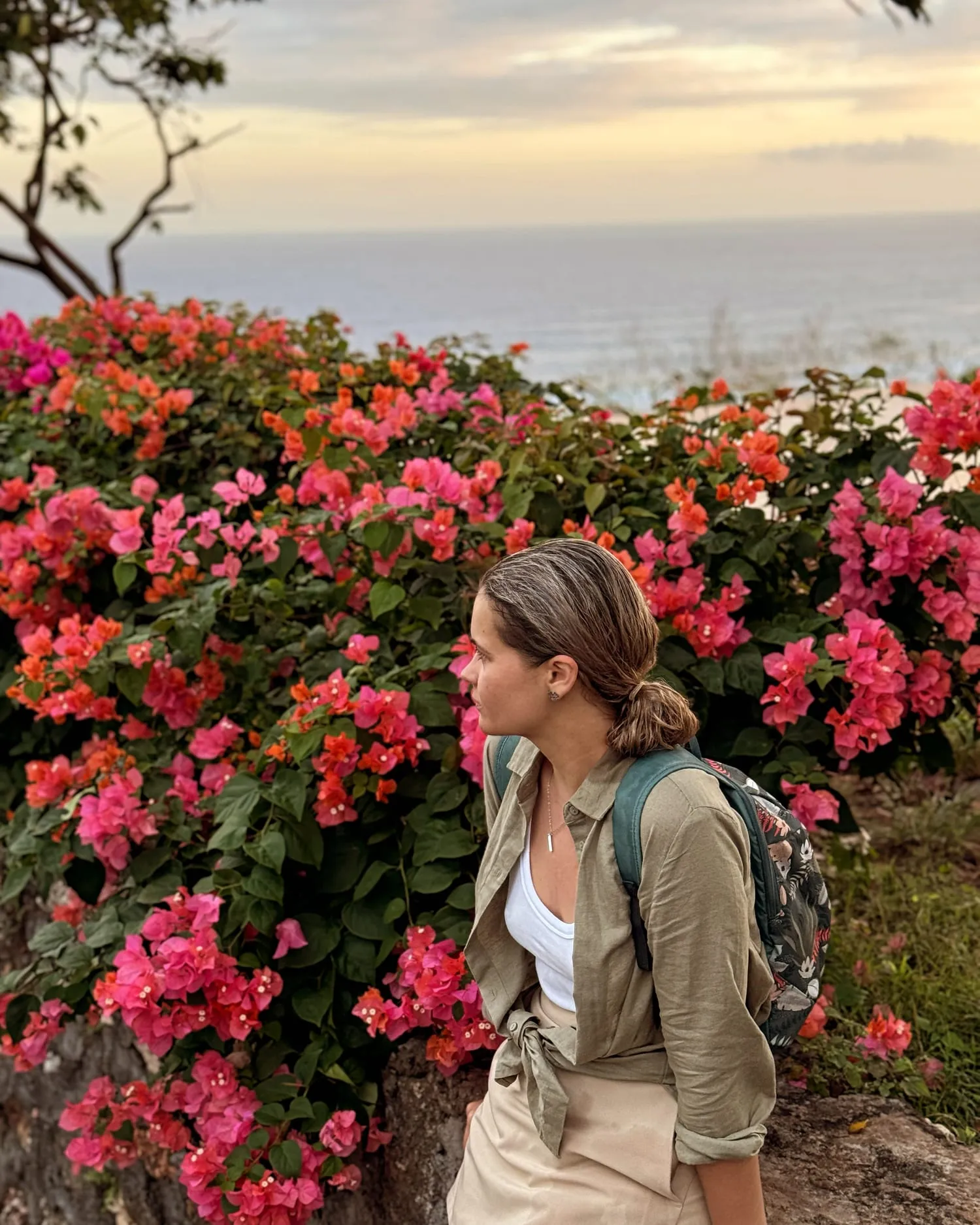
One of the locals, busy with a coconut, and the bougainvillea by the amphitheatre in the evening.
Good to know
- Getting there: 5 minutes by road from Pandawa. Park at the top.
- The walk: steep steps down, and back up in the sun. Allow 15–20 minutes each way.
- Swimming: good at high tide. Bring water and snacks; there’s very little at the bottom.
3. Melasti Beach
Melasti is the most photographed beach on the Bukit. Like Pandawa, the road down was cut through the cliff, and a tall Balinese gate stands at the top.
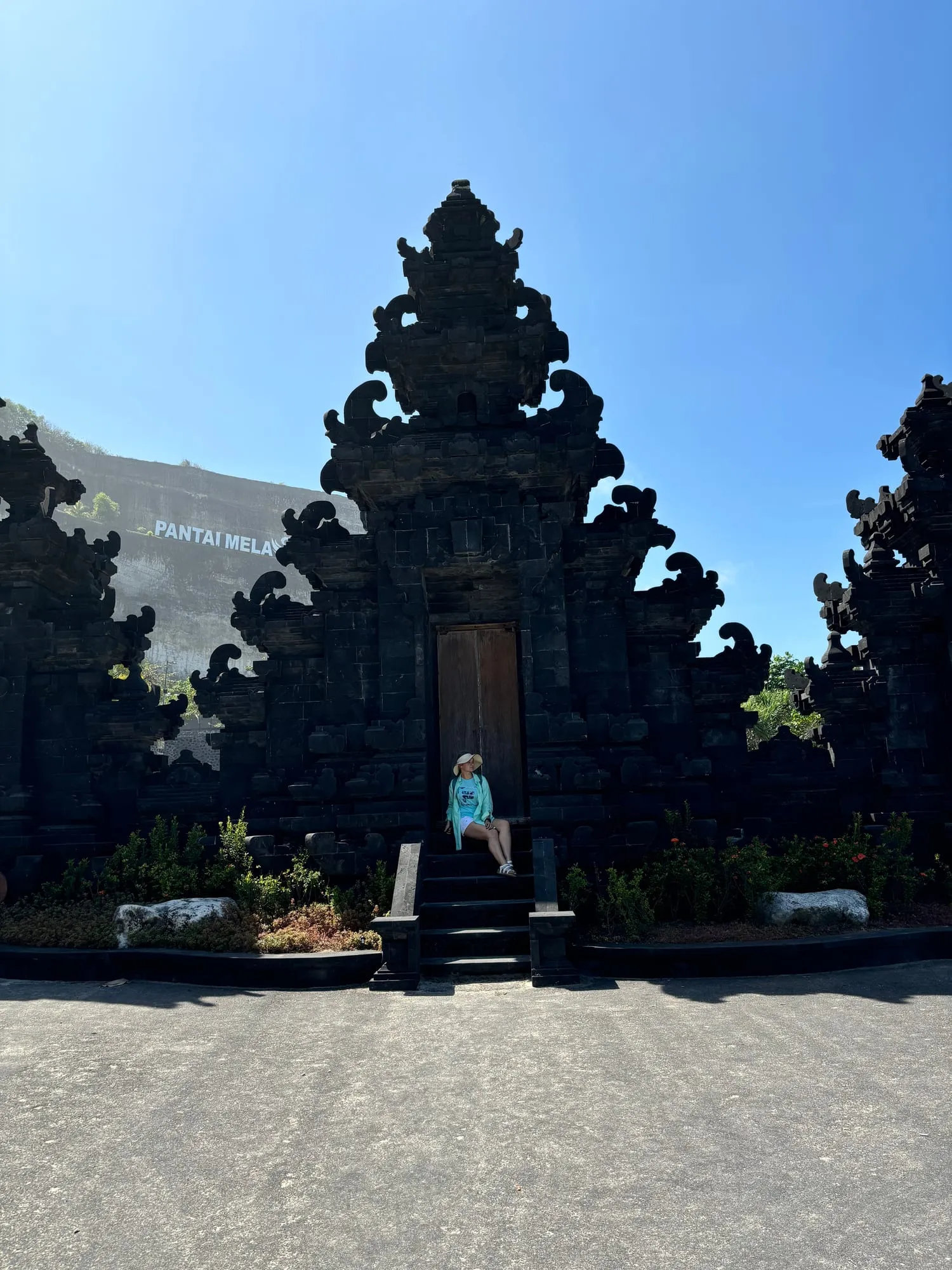
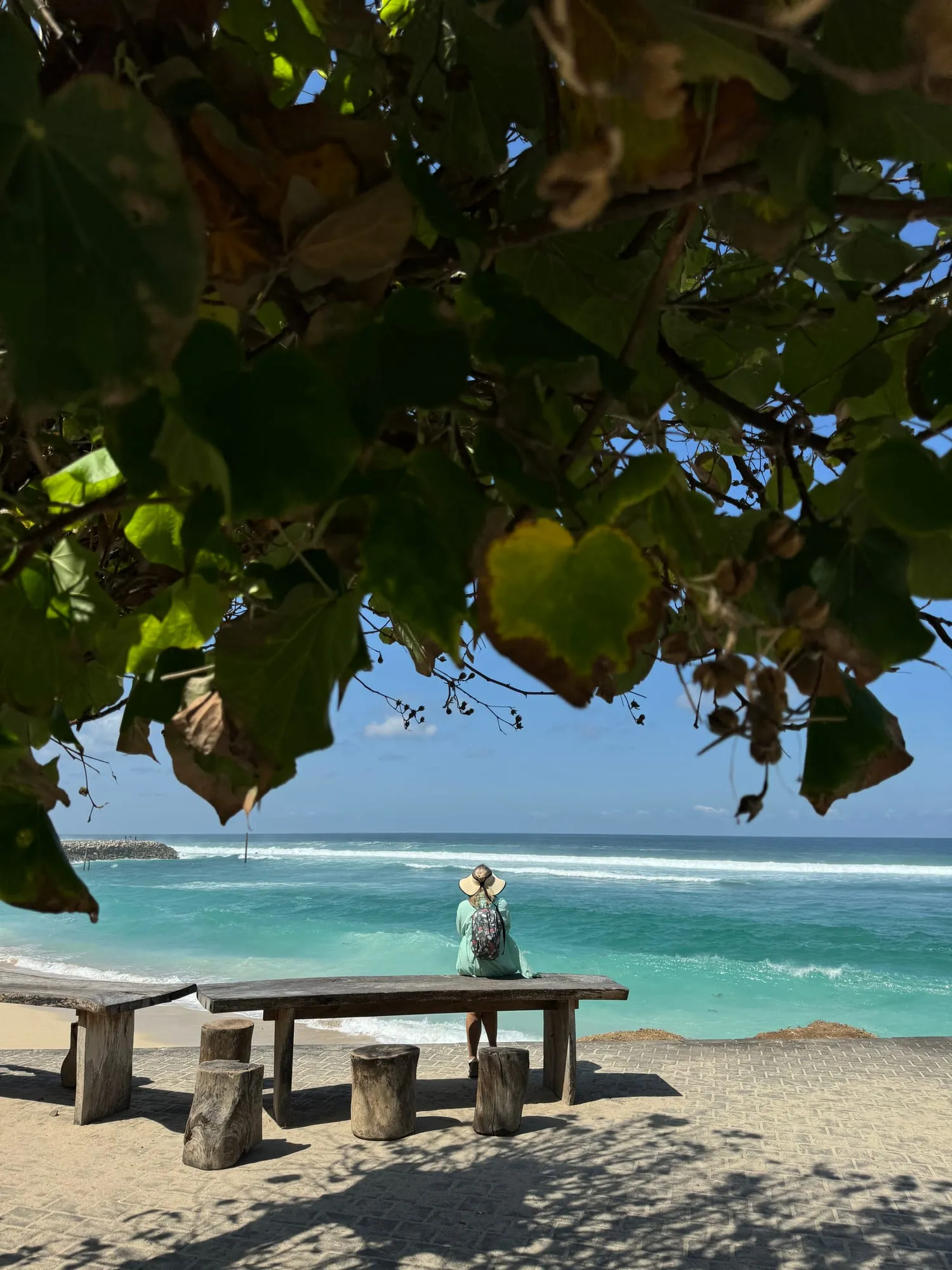
The gate at the top of the road, and the beach below.
The beach is white sand with very clear water, and there are a few beach clubs along it. The waves can be strong, especially on the rocks at the edges, so stay in the sandy middle section when you swim.
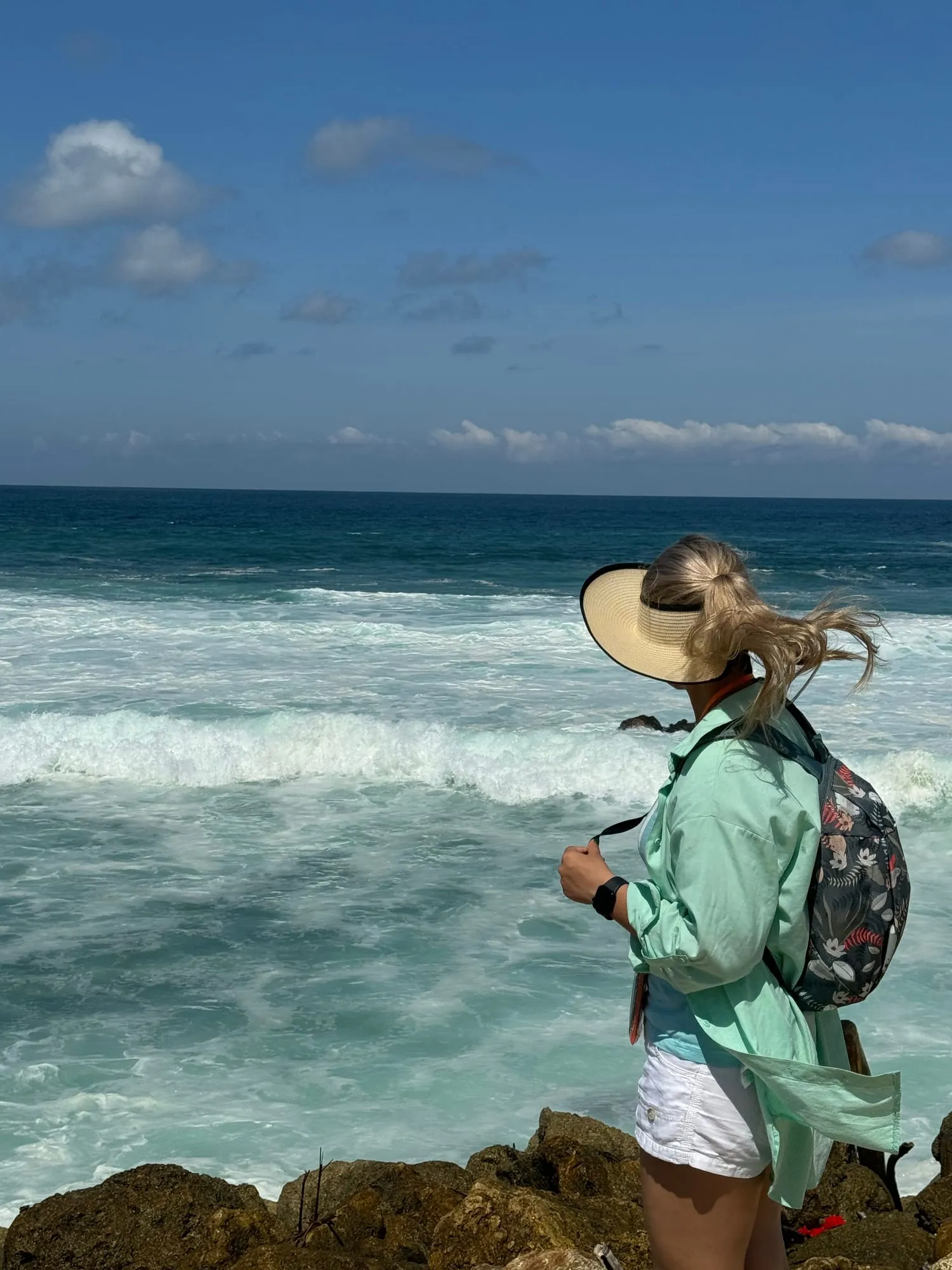
The rocks at the side of Melasti, where the waves break hardest.
Come back for sunset. The beach faces west along the coast, and swimming while the sky turns orange is the best way to end a day on the Bukit.
Good to know
- Getting there: by car or scooter down to the beach. Paid parking.
- Swimming: best at mid to high tide, in the centre of the beach.
- Time to go: morning for clear water and fewer people, late afternoon for sunset.
4. Green Bowl Beach
Green Bowl is a small beach at the bottom of a long staircase through the jungle, with sea caves at one end and a surf break offshore. It’s one of the quietest beaches on the peninsula, because the steps put most people off.
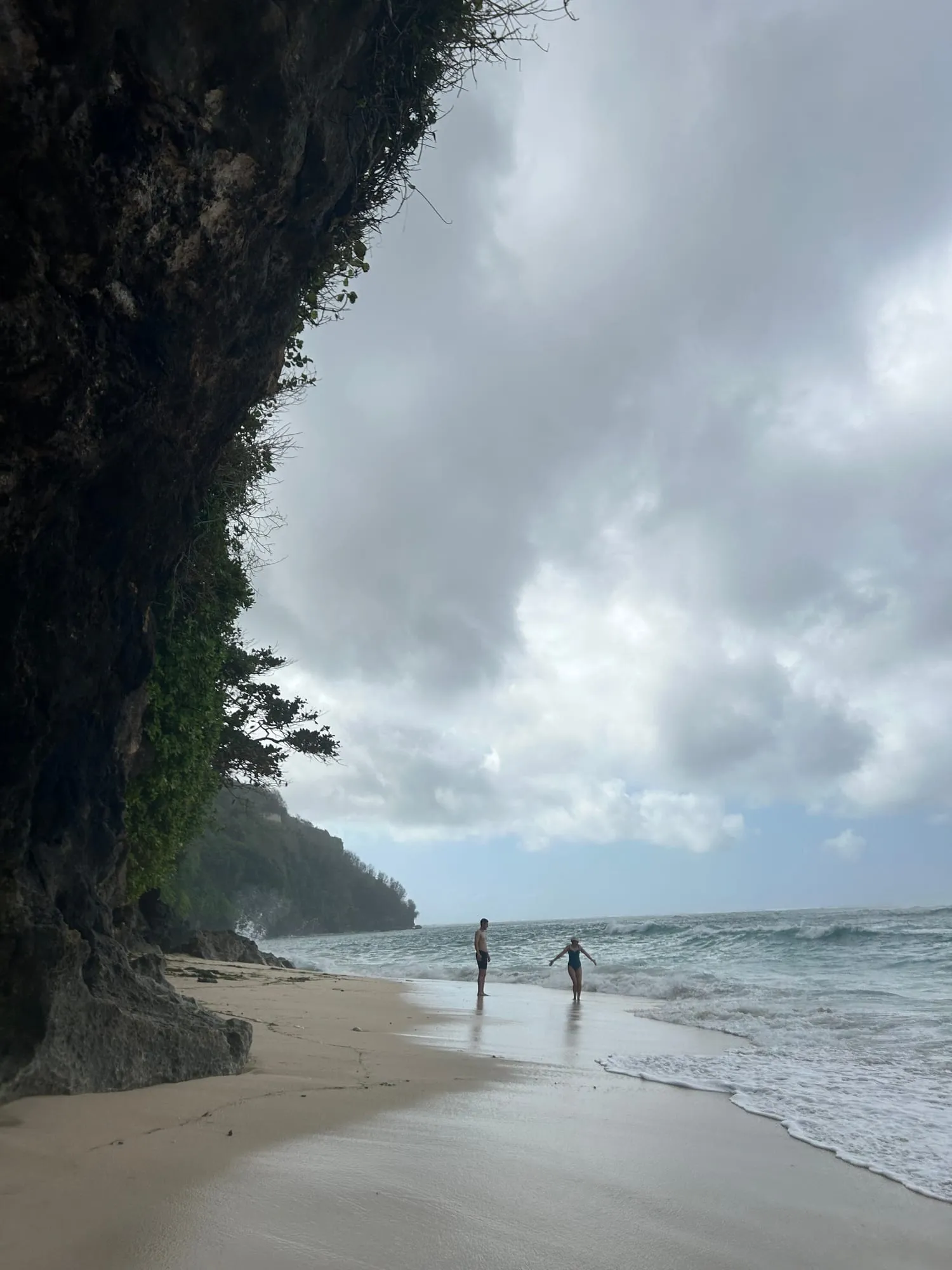
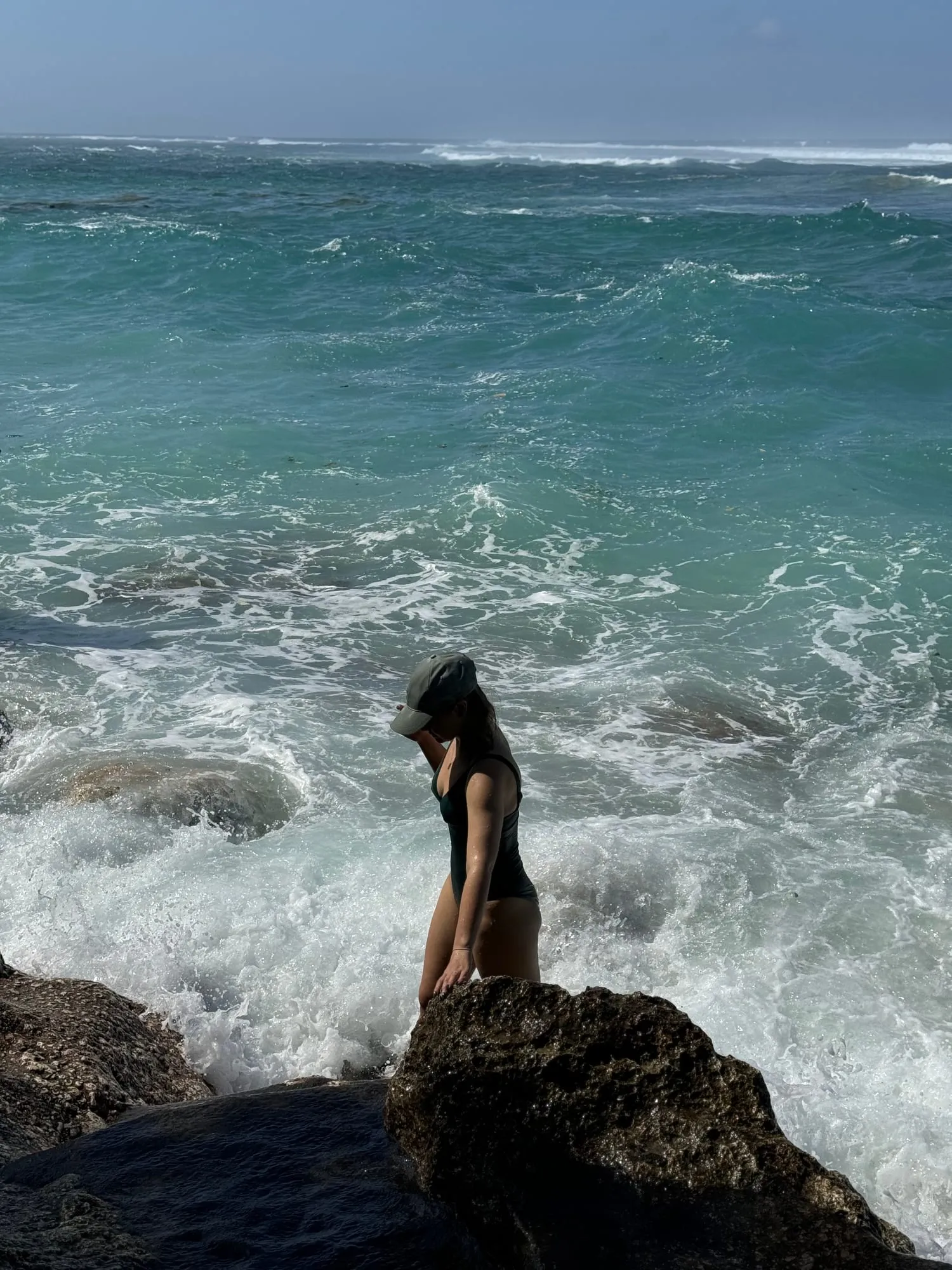
Green Bowl under the cliff, and the surf on the rocks at the edge of the beach.
The beach changes completely with the tide. At low tide there’s a wide strip of sand and you can walk to the caves; at high tide the water comes almost up to the cliff. The waves here are stronger than at Pandawa, so swim only when it’s calm.
Good to know
- Getting there: about 10 minutes from Melasti. Park at the top.
- The walk: around 300 steps down. There are monkeys on the staircase.
- Swimming: check the tide before you go. At high tide there’s almost no beach.
Beaches and sunsets on the west coast
5. Balangan Beach
Balangan is a wide, golden beach below a green headland on the west side of the Bukit, with simple warungs right on the sand. It’s a surf beach first: there’s a reef break in front of it, and most mornings there are surfers in the water and boards lined up by the warungs.
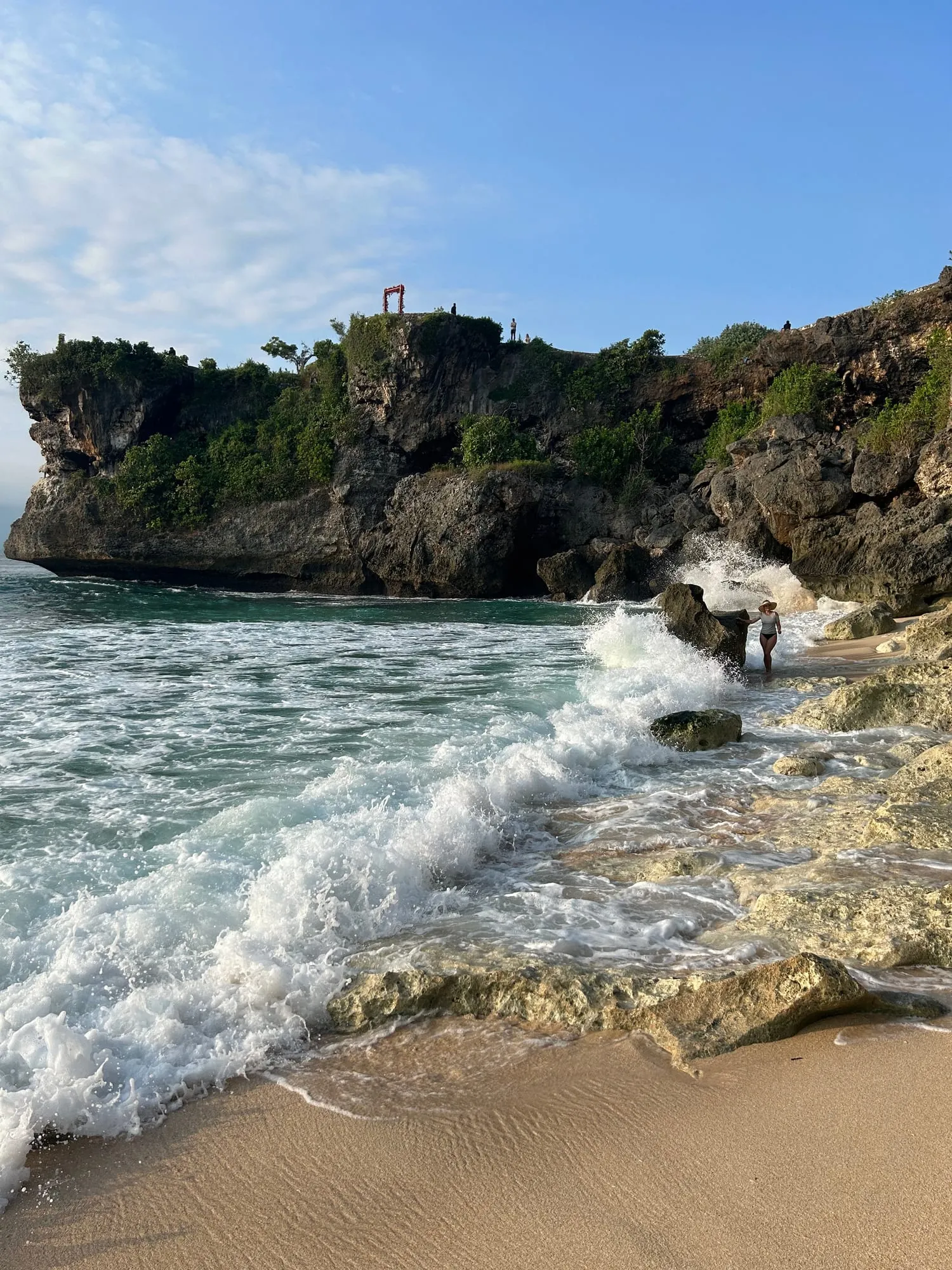
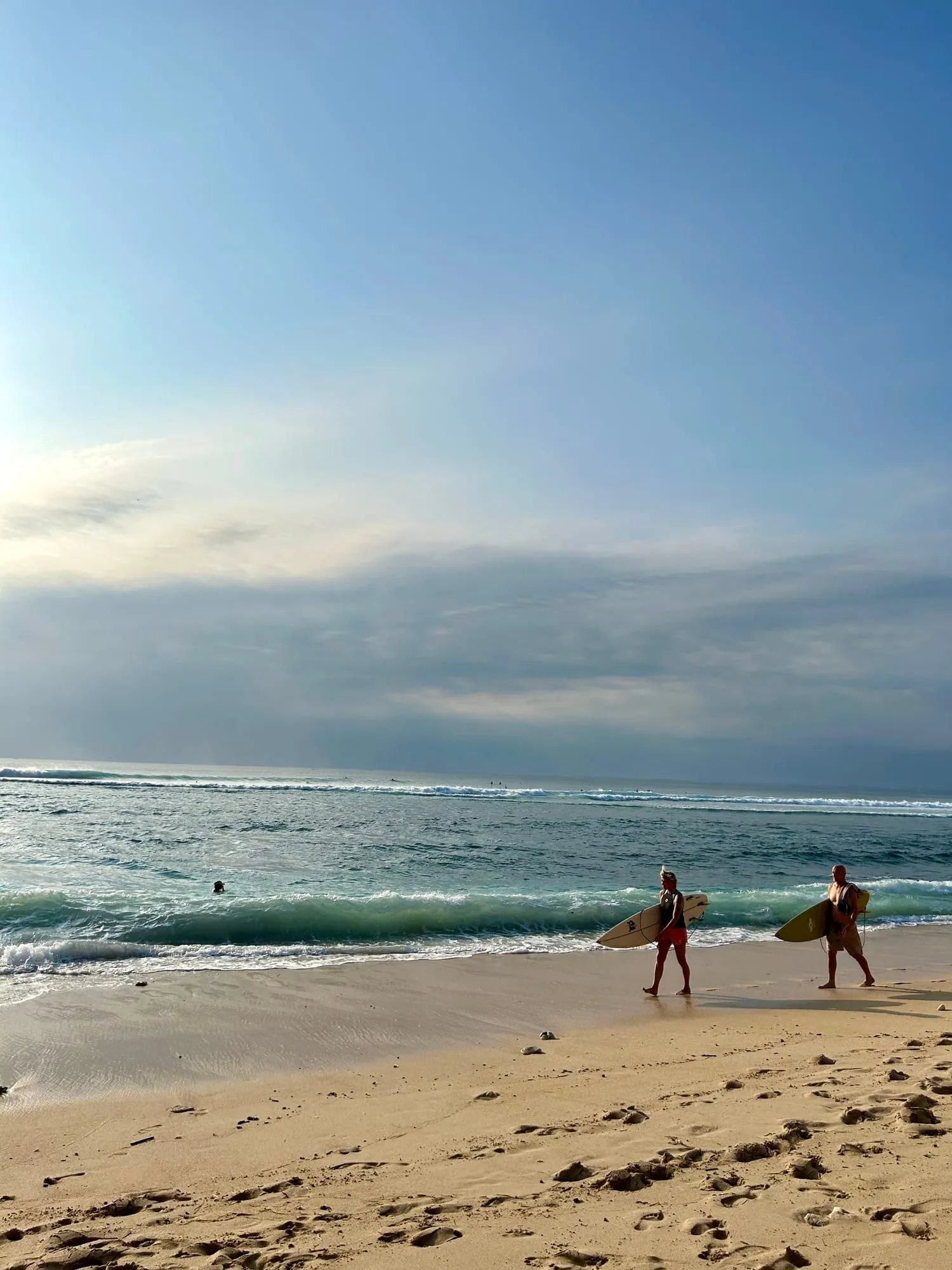
Balangan: waves on the rocks below the cliff, and surfers heading out.
For swimming, stay away from the surf break and the rocks and pick the sandy middle of the beach. Late afternoon is the best time: the light is soft, the beach faces the sunset and the warungs fill up for a drink.
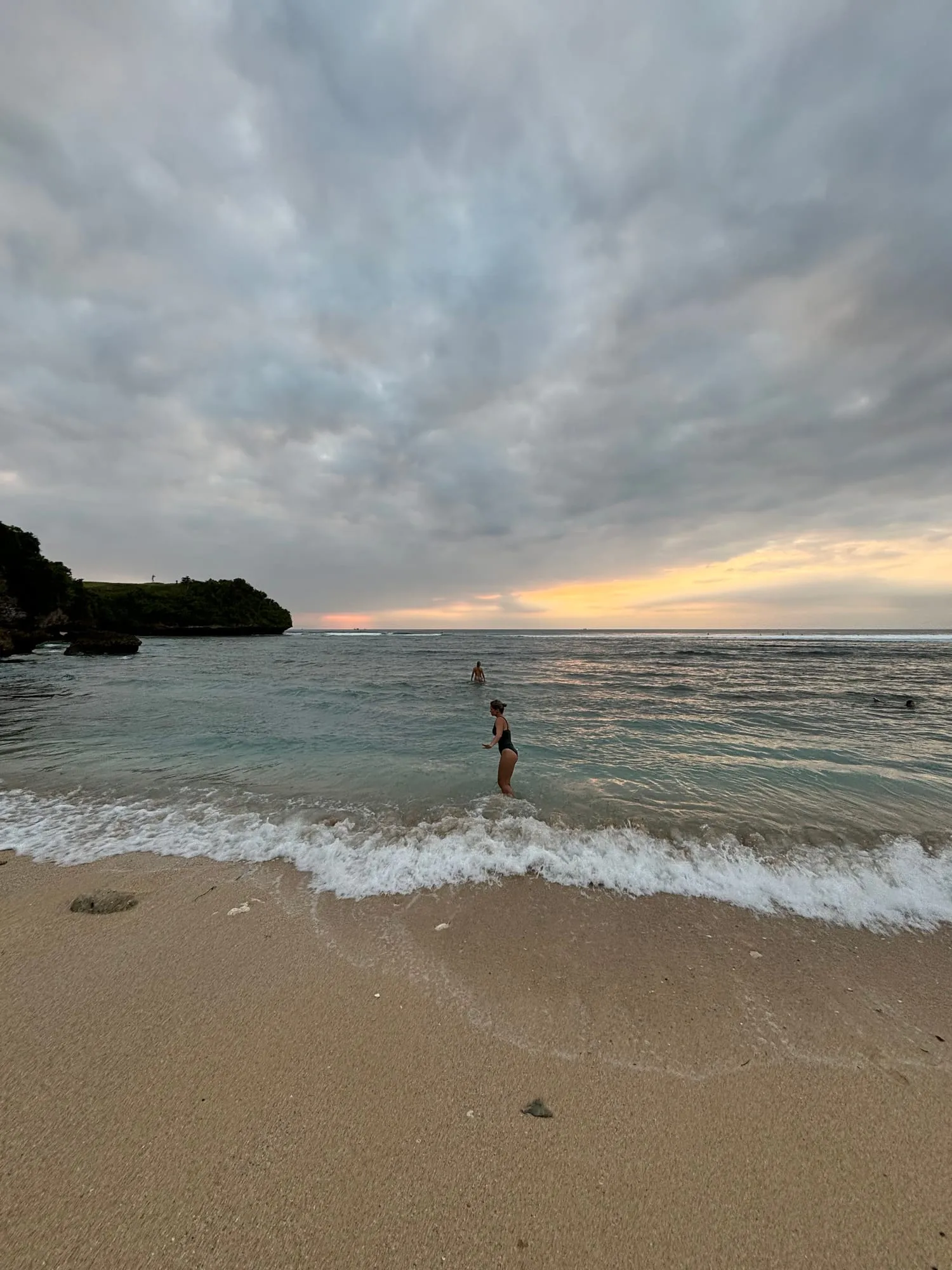
A late swim at Balangan.
Good to know
- Getting there: about 20 minutes from Jimbaran. You can park close to the sand.
- Swimming: easiest at mid to high tide, away from the reef break.
- Food: warungs on the beach, good for a cold drink at sunset.
6. Uluwatu Temple at sunset
Not a beach, but every trip to Uluwatu should include it. Pura Luhur Uluwatu sits on top of a cliff about 70 metres above the sea, at the far south-western tip of Bali. Paths run along the cliff edge on both sides of the temple, and at sunset the whole coastline turns gold.
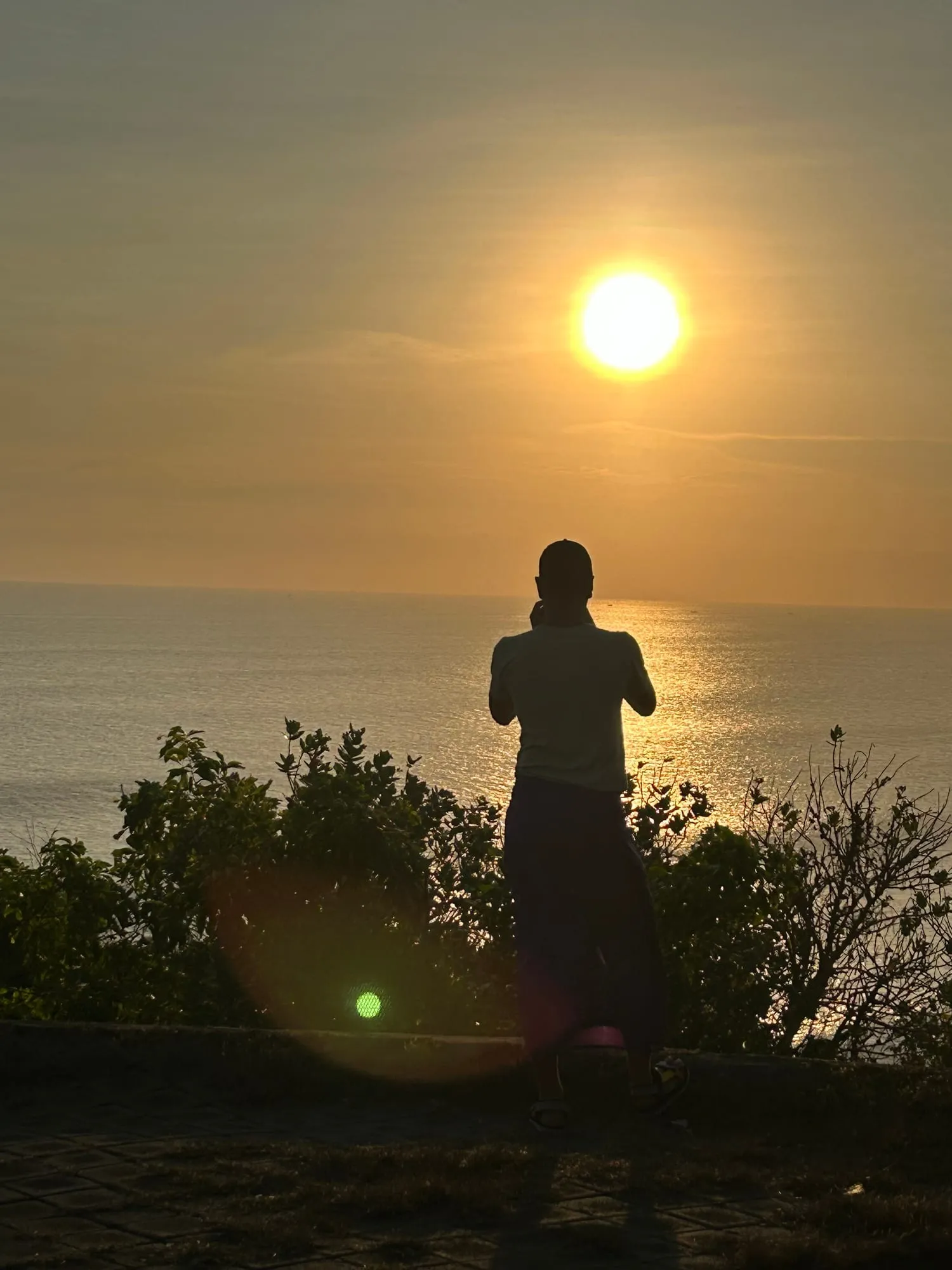
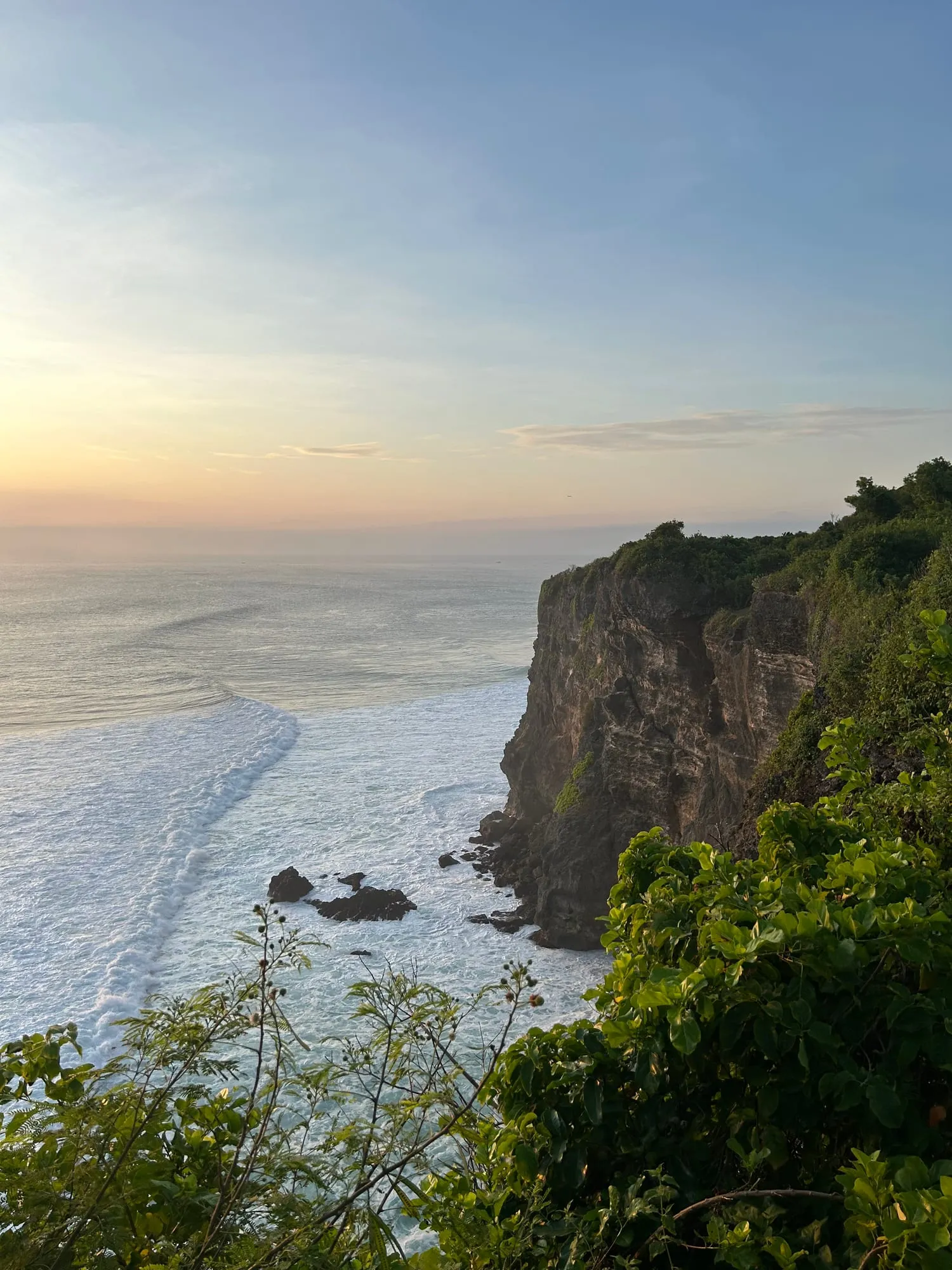
Sunset from the cliffs at Uluwatu Temple.
The Kecak fire dance is performed in an open-air amphitheatre next to the temple every evening at sunset. It’s worth seeing; buy your ticket when you arrive, because it sells out in high season.
Good to know
- What to wear: a sarong and sash are required and handed out at the entrance.
- Monkeys: the monkeys here are famous for stealing sunglasses, phones and hats. Don’t carry anything loose.
- Arrive: about an hour before sunset to walk the cliff paths before the Kecak starts.
More Uluwatu beaches worth knowing about
I don’t have photos from these, but they’re on most lists and close to the ones above:
- Padang Padang: a small, pretty beach reached through a narrow gap in the rocks. Very busy.
- Bingin: a surf beach with cafés and guesthouses built into the cliff.
- Suluban (Uluwatu Beach): a tiny beach in a cave below the cliffs, mostly for surfers.
- Dreamland: a long, developed beach with big resorts behind it.
- Nyang Nyang: a long, wild beach at the bottom of a very long walk.
Tips for swimming in Uluwatu
- Check the tide. This matters more than anything else. At low tide the reef is exposed on most beaches; at high tide some beaches disappear. Mid to rising tide is usually best.
- Wear reef shoes. The rocks and reef have sea urchins and sharp coral.
- Respect the waves. The Bukit has some of Bali’s strongest surf, especially from May to September. Swim where others are swimming, away from rocks and surf breaks, and don’t go out alone.
- Watch for red flags. Some beaches have lifeguards and flags; if there’s a red flag, stay out.
- Bring cash. Parking and entrance fees are small but almost always cash.
- Mind the monkeys. At Gunung Payung, Green Bowl and the temple, keep food and loose things in a closed bag.
If you’re spending more time in Bali, see my guide to the best waterfalls in Bali, grouped into day trips, and how to do a Nusa Penida day trip from Sanur.
- Best time to swim
- Mid to high tide. At low tide the reef comes up close to the surface on most beaches.
- Entrance fees
- Small fees at most beaches (usually under IDR 30,000), plus parking. Cash.
- Getting around
- Scooter or a driver. The beaches are 10–30 minutes apart, mostly down steep roads or stairs.