Best Waterfalls in Bali: 11 Worth the Drive, Grouped Into Day Trips
The Bali waterfalls I'd go back to, grouped by area so you can see three or four in a day. What each one is like, when to arrive and what to wear.
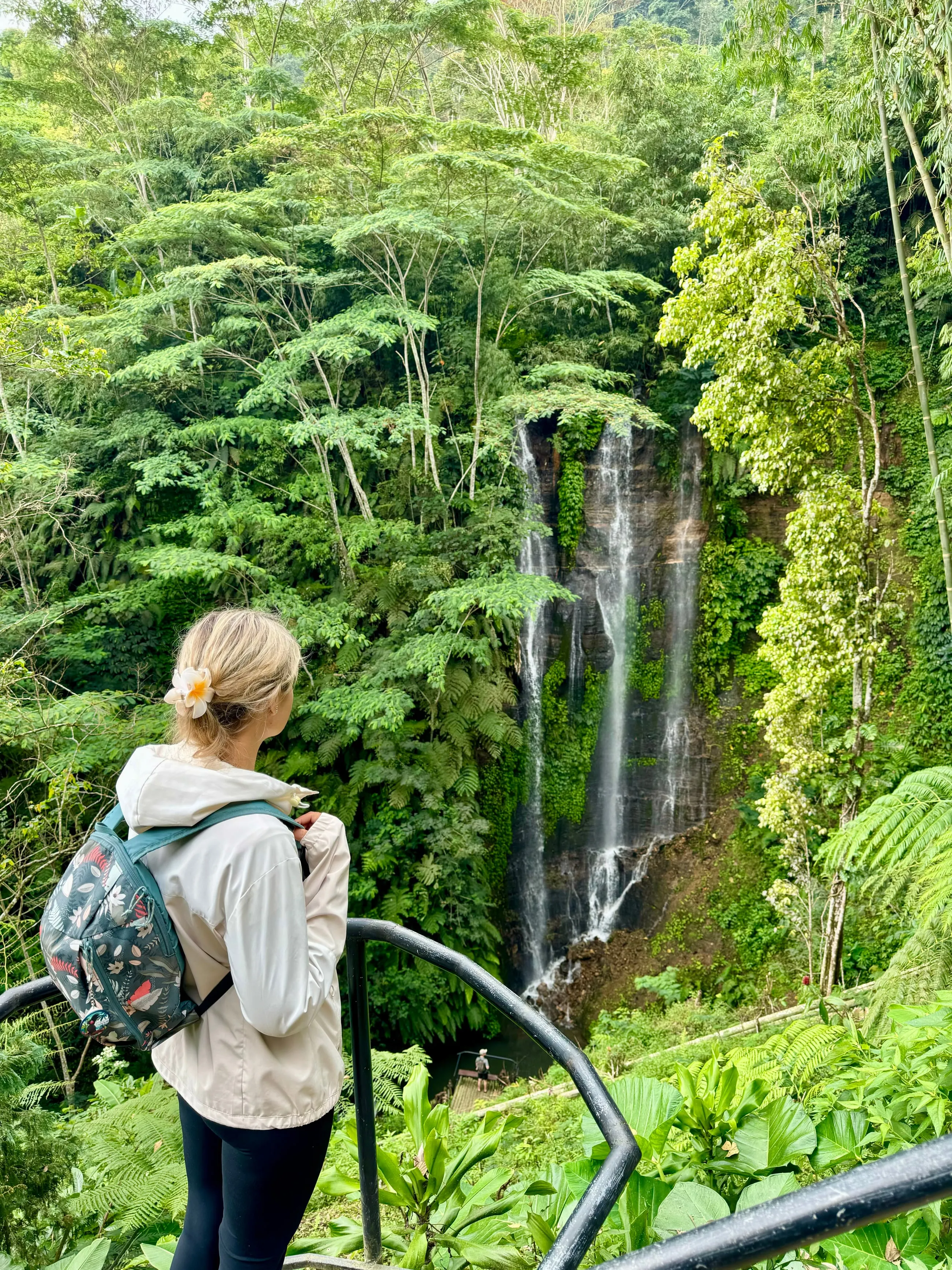
Bali has dozens of waterfalls, and the photos online make them all look the same: one person in a swimsuit, no crowd, perfect light. In reality they’re very different. Some are a five-minute walk from the car park, some mean wading up a river through a canyon, and some are two and a half hours from the south of the island.
I’ve grouped the ones I visited by area. Each group fits into one day with a driver, so you don’t spend half your trip in traffic going back and forth. At the end there’s a short list of other waterfalls worth knowing about, and the practical bits: what to wear, when to go and what it costs.
The waterfalls at a glance
- Near Ubud (Gianyar): Tegenungan, Kanto Lampo, Goa Rang Reng. Easy to combine, 20–40 minutes from Ubud.
- Bangli and Sebatu: Tukad Cepung, Grudugan and Ulu Petanu. Canyons, rock chambers and wading. 45–60 minutes from Ubud.
- Central highlands: Nungnung, Batu Lantang and Pengempu. Big drops, lots of steps, very few people.
- North Bali: Sekumpul, Golden Valley and the Munduk waterfall trail. Cooler, greener and quieter, but a long drive.
I’ve been to Bali several times: in June and May, in the dry season, and in late December, in the middle of the rainy season. The photos come from different trips, so you can see the difference: in December there’s far more water and far more mud.
Day 1: Waterfalls near Ubud
1. Tegenungan Waterfall
Tegenungan is the waterfall most people see first because it’s the closest big one to Ubud, about 20–30 minutes south in Kemenuh village. It’s wide, loud and properly powerful, especially after a night of rain.
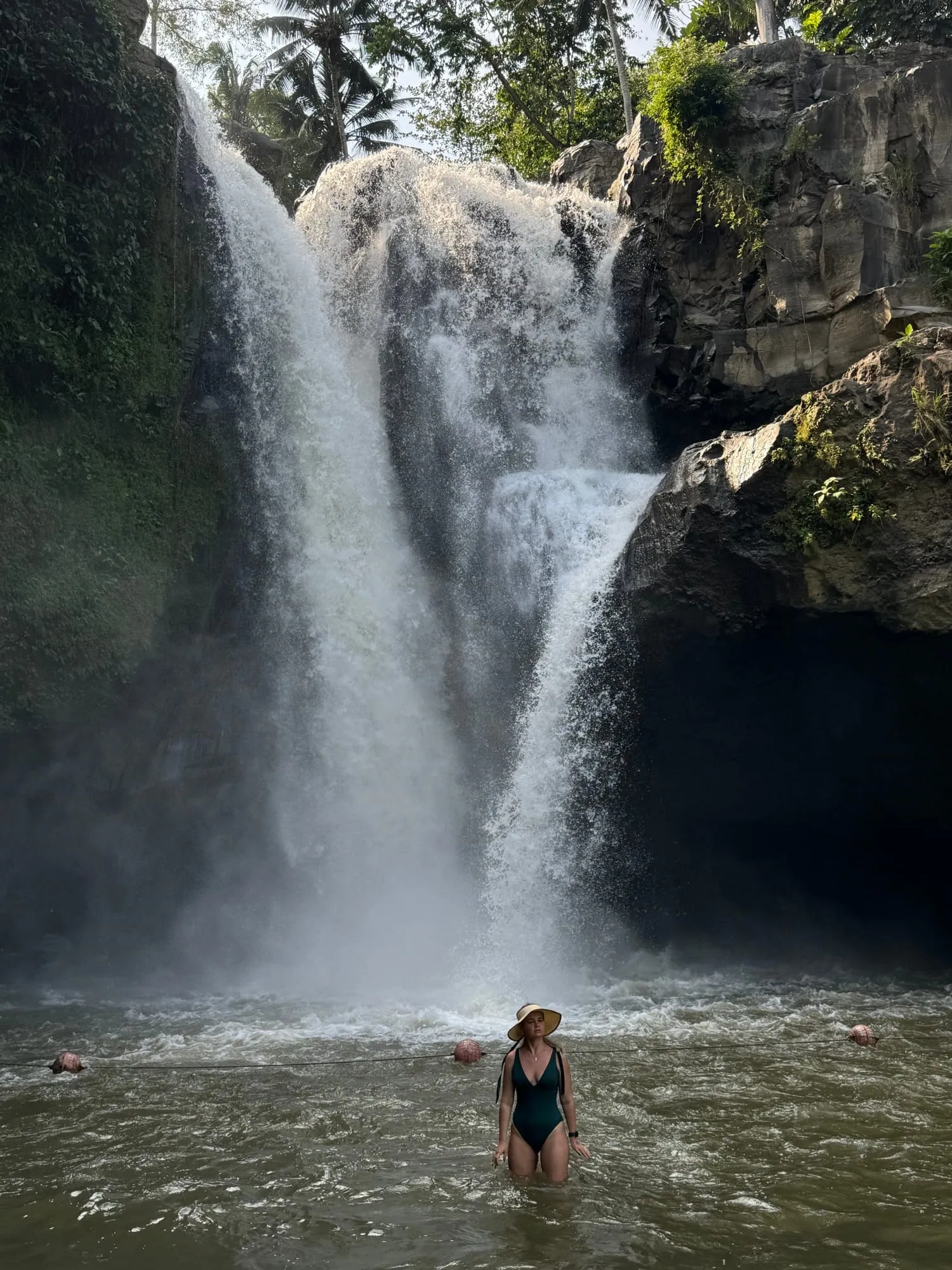
Tegenungan in June. The flow is still strong in the dry season.
The top is busy with cafés, swings and photo spots, and you take a long staircase down to the river. On the way there’s a small spring temple where you can do melukat, the Balinese water purification ritual: you step into the pool and go under each of the spouts in turn. Bring a sarong and something you don’t mind getting wet.
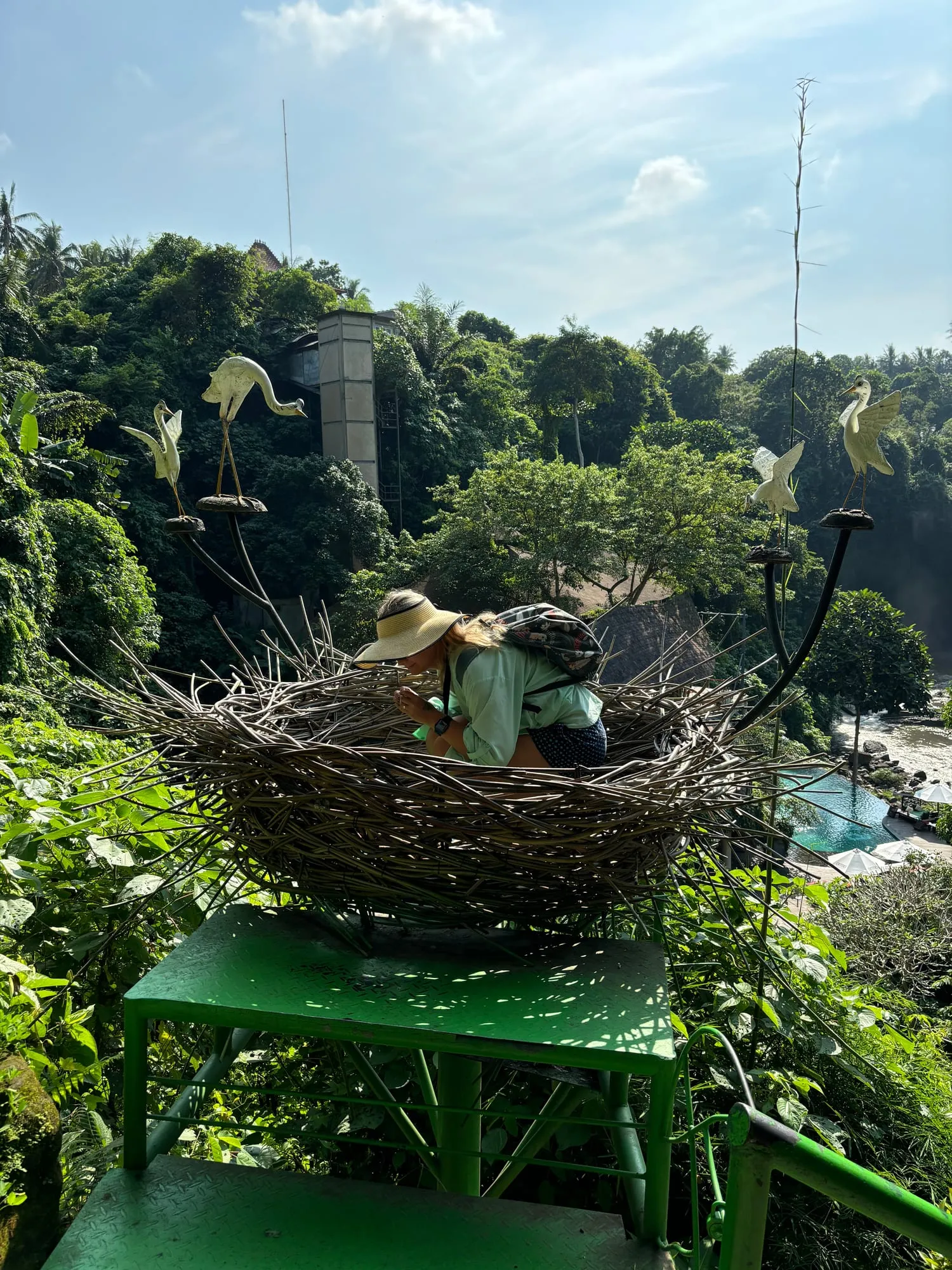
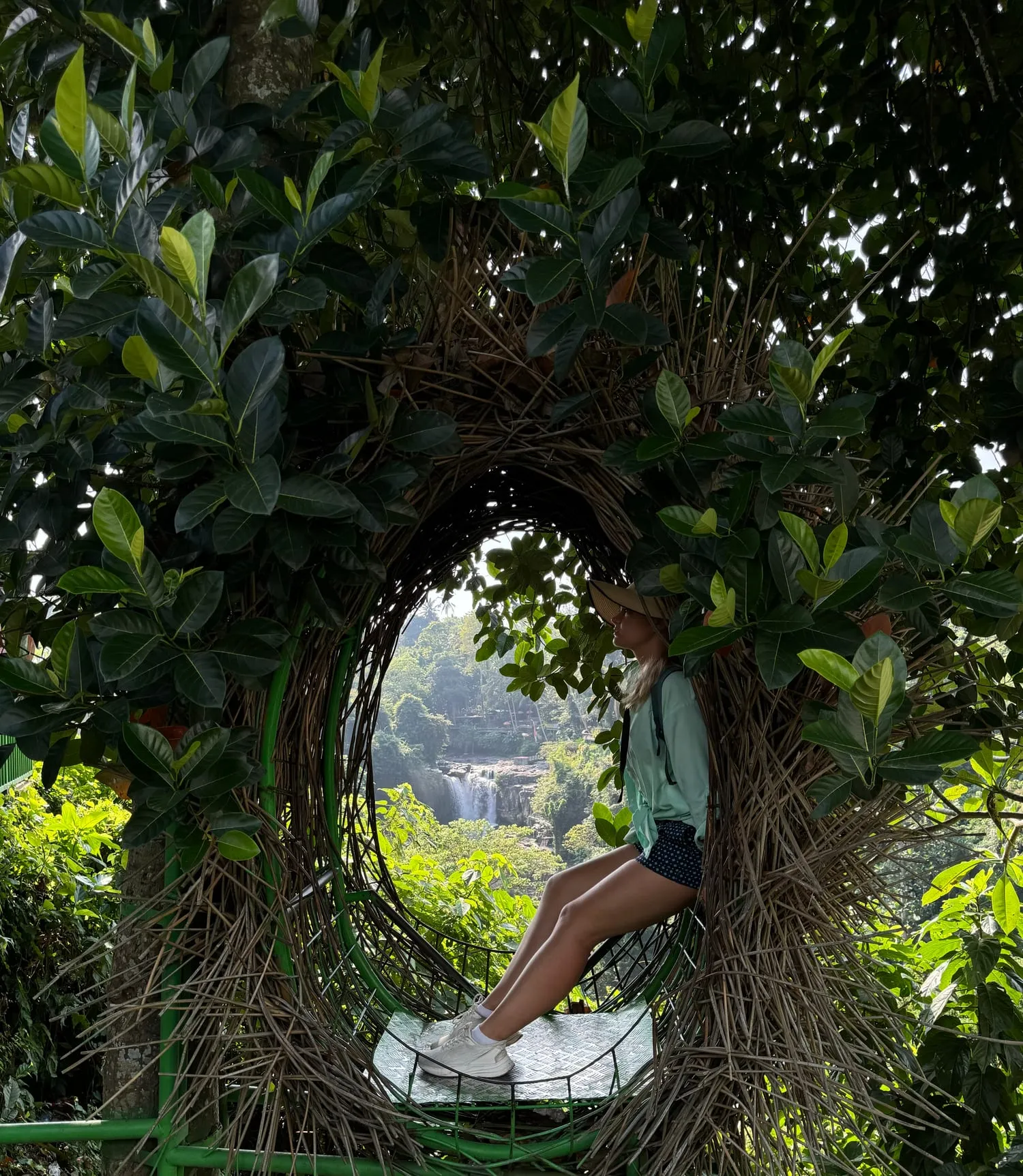
Two of the photo spots on the way down.
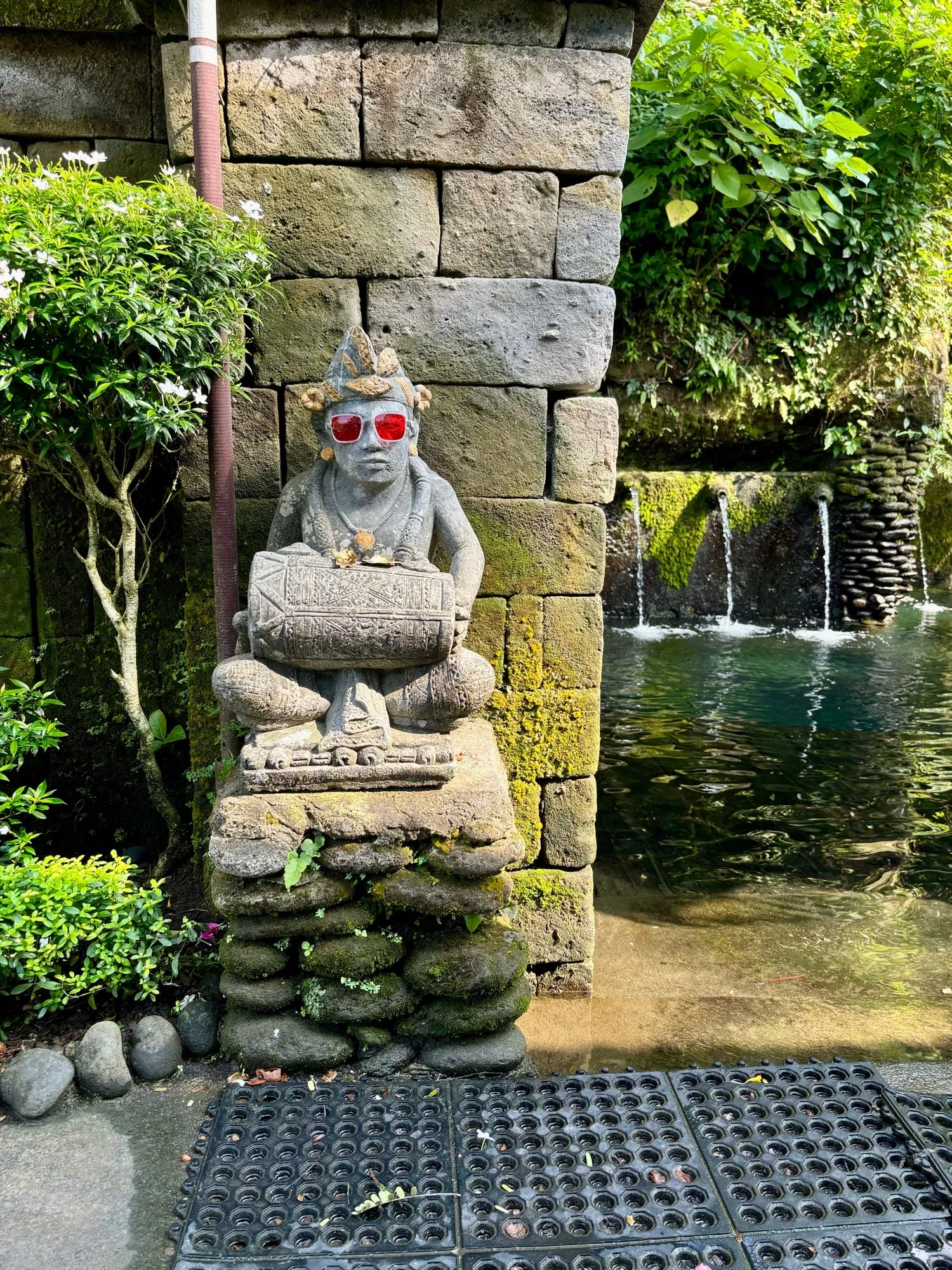
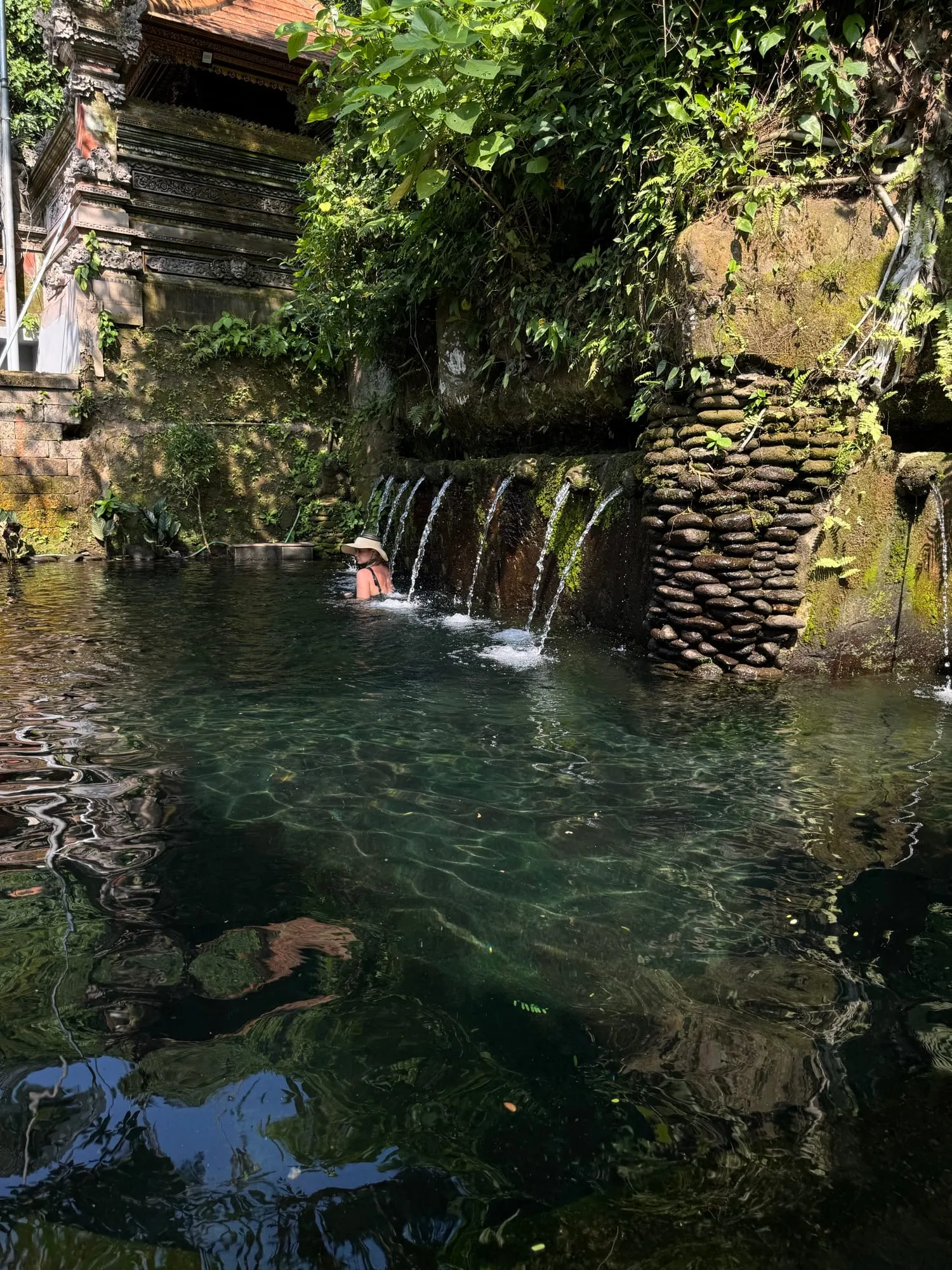
The spring temple on the way down, and the pool where you go under each spout.
Good to know
- Getting there: 20–30 minutes from Ubud by car or scooter.
- The walk: a long staircase down and back up. Not difficult, but it’s hot by midday.
- Swimming: allowed in the pool when the water is calm. Stay away from the base of the falls; the current is stronger than it looks.
- Crowds: the busiest waterfall in this guide. Go first thing in the morning.
2. Kanto Lampo Waterfall
Kanto Lampo is in Beng village, about 25 minutes from Ubud. The water spills down a wall of stepped black rock, so instead of one curtain you get dozens of small streams, and you can climb onto the lower ledges and stand right in the spray.
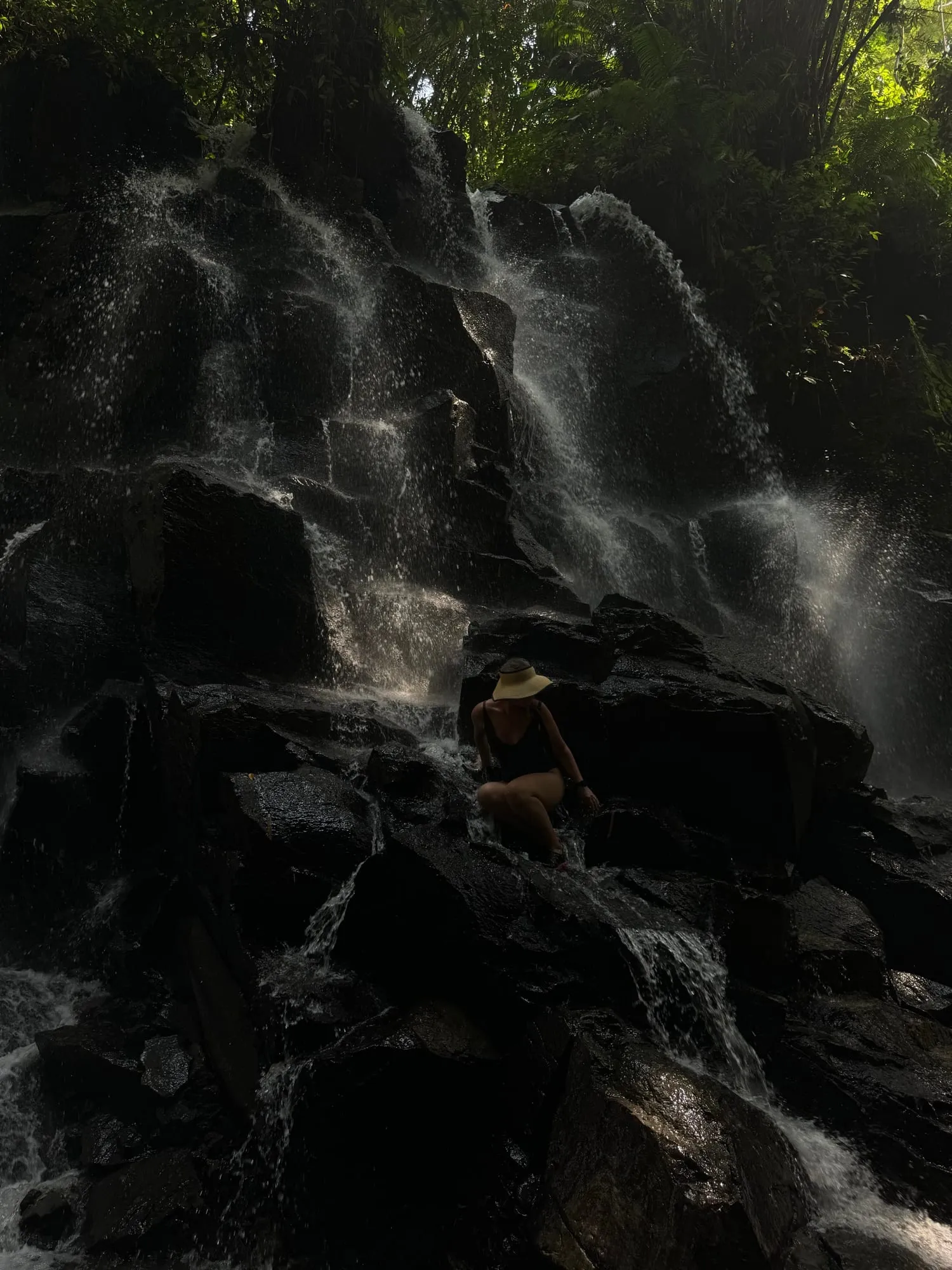
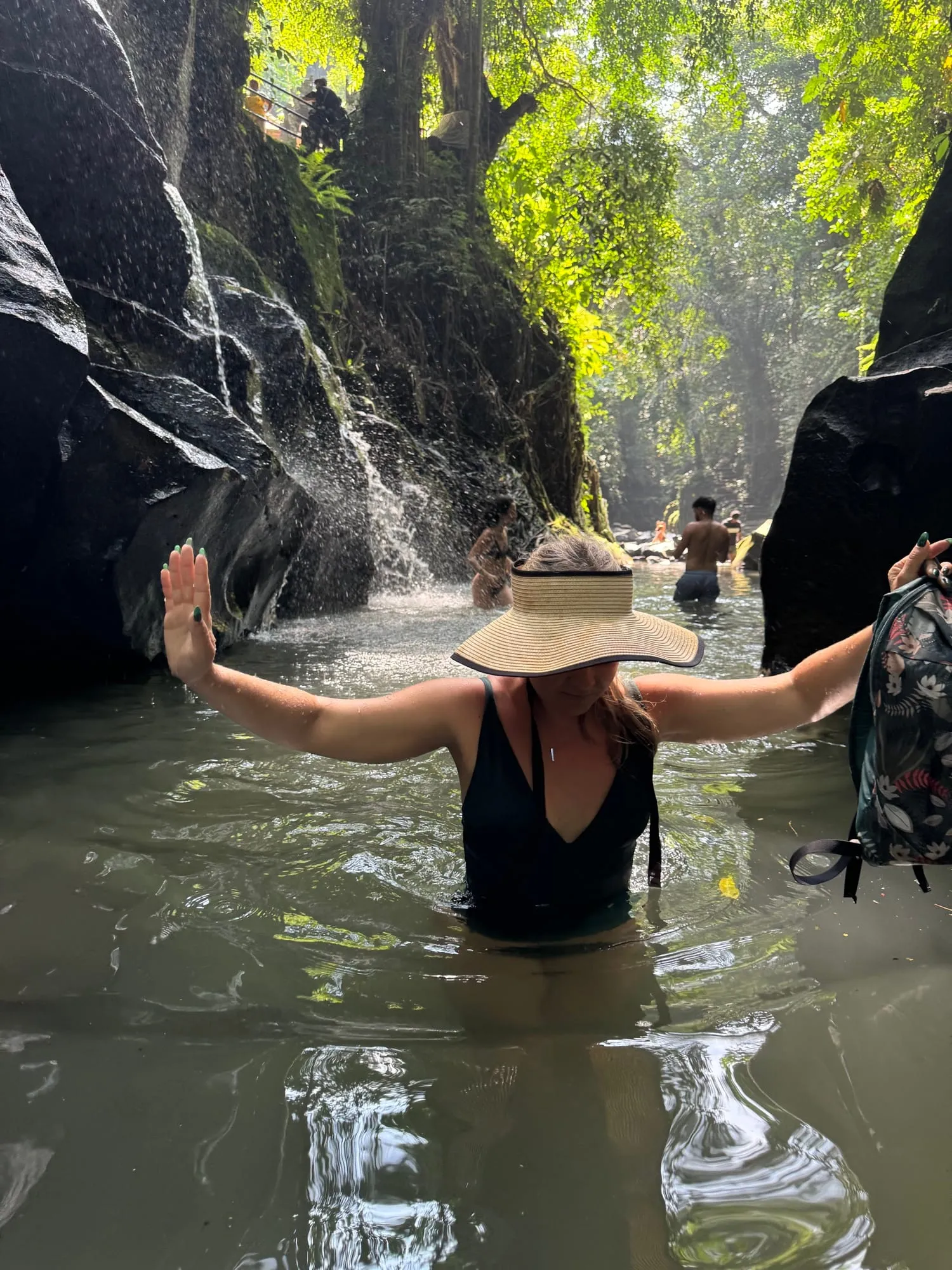
Kanto Lampo, and the stretch of river between rock walls that you can wade up.
What surprised me was how much there is around it. Upstream you can wade between narrow rock walls, there’s a small cave above the falls, and a pool just before the waterfall that’s calm enough to sit in.
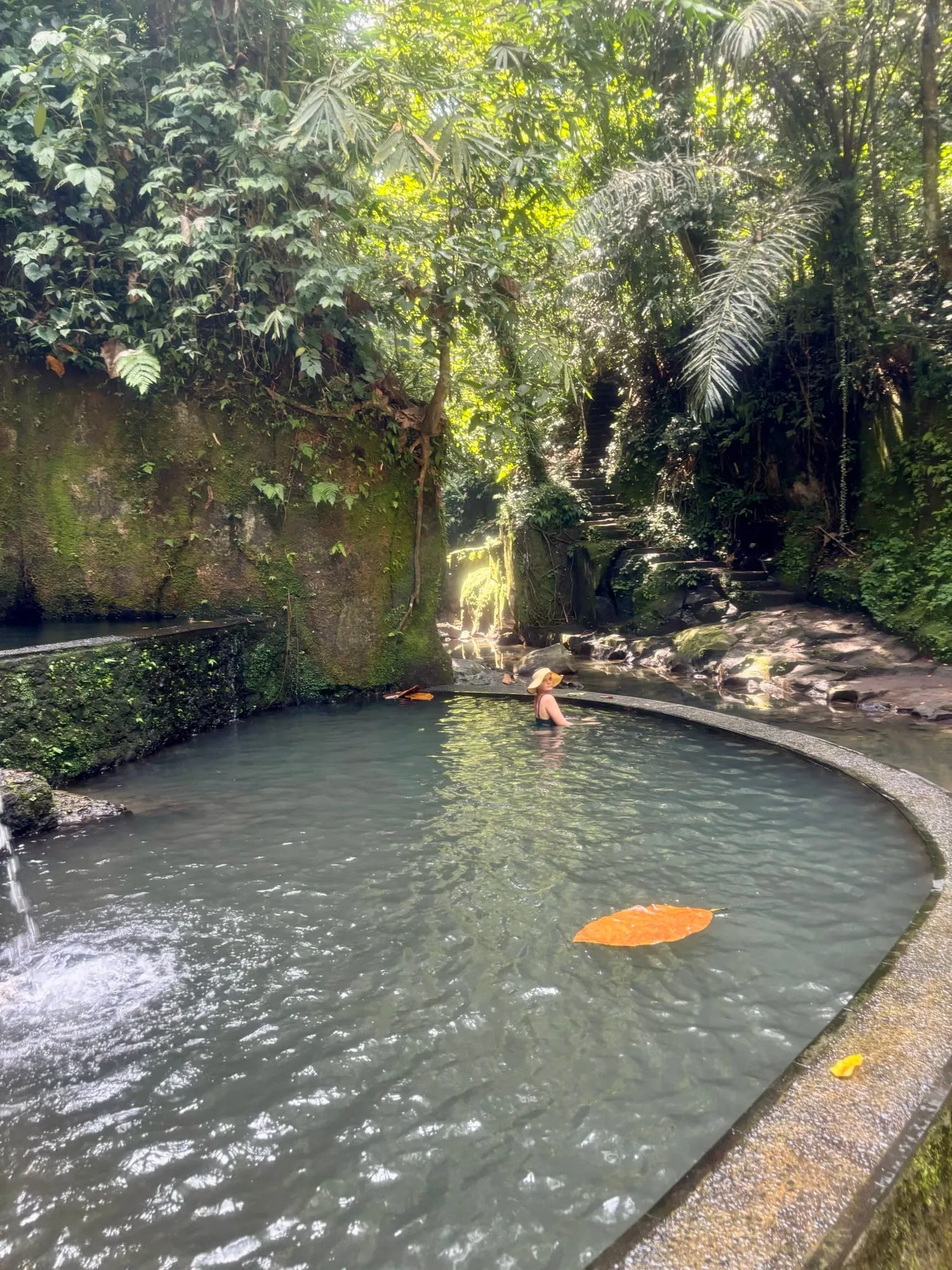
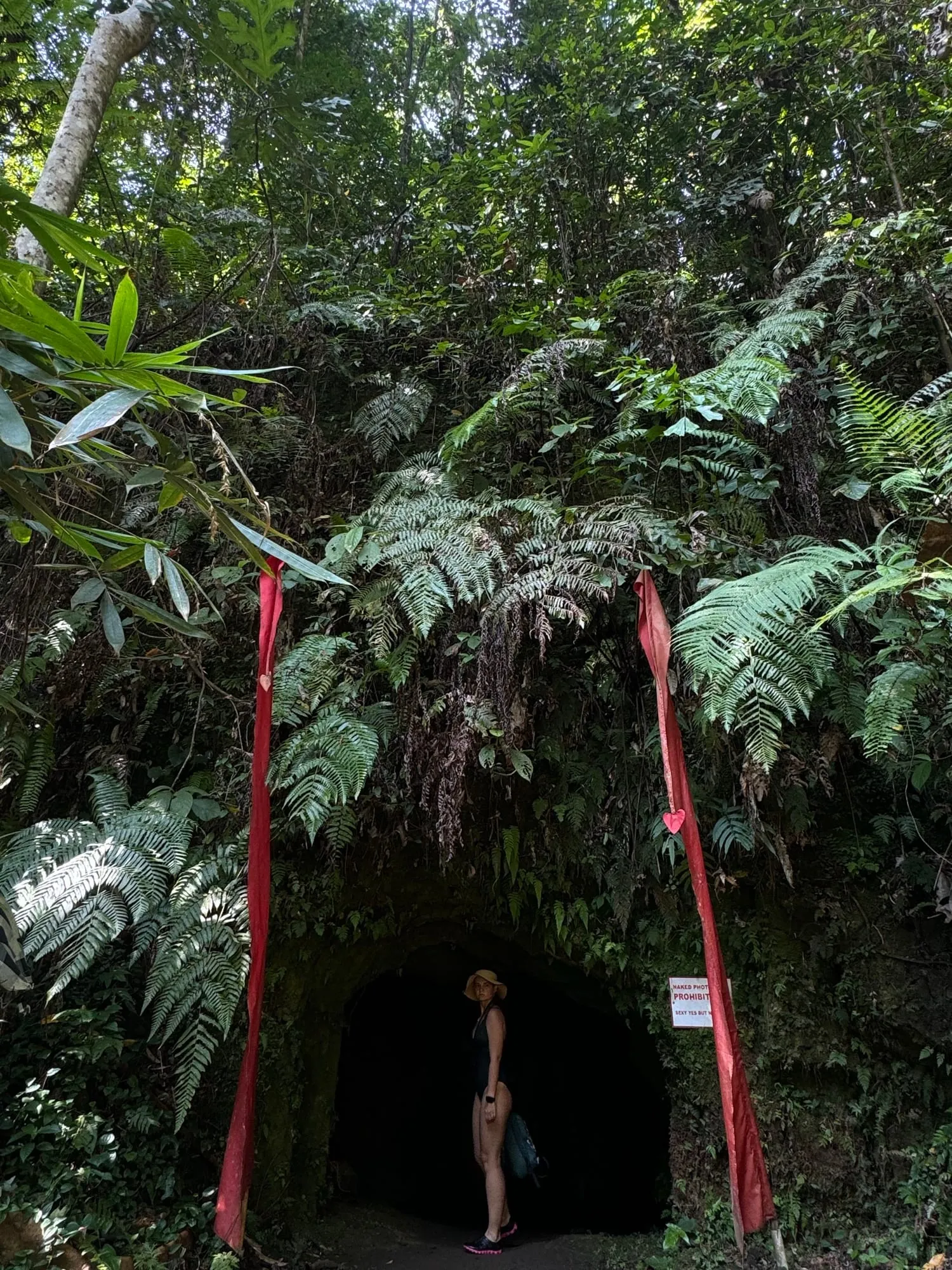
The pool in front of the falls and the cave entrance above them.
Good to know
- Getting there: about 25 minutes from Ubud, 10–15 minutes from Tegenungan.
- The walk: short, a few minutes of steps down from the car park.
- Wear: water shoes or sandals with grip. The rocks are slippery and you’ll be in water up to your knees at least.
- Crowds: there’s often a queue for photos on the rocks by late morning.
3. Goa Rang Reng Waterfall
Goa means cave, and Goa Rang Reng is a wide waterfall next to a cave in the river gorge, a few minutes’ drive from Tibumana. It’s lower than Tegenungan but broad, with water spreading over a rock shelf into a shallow pool.
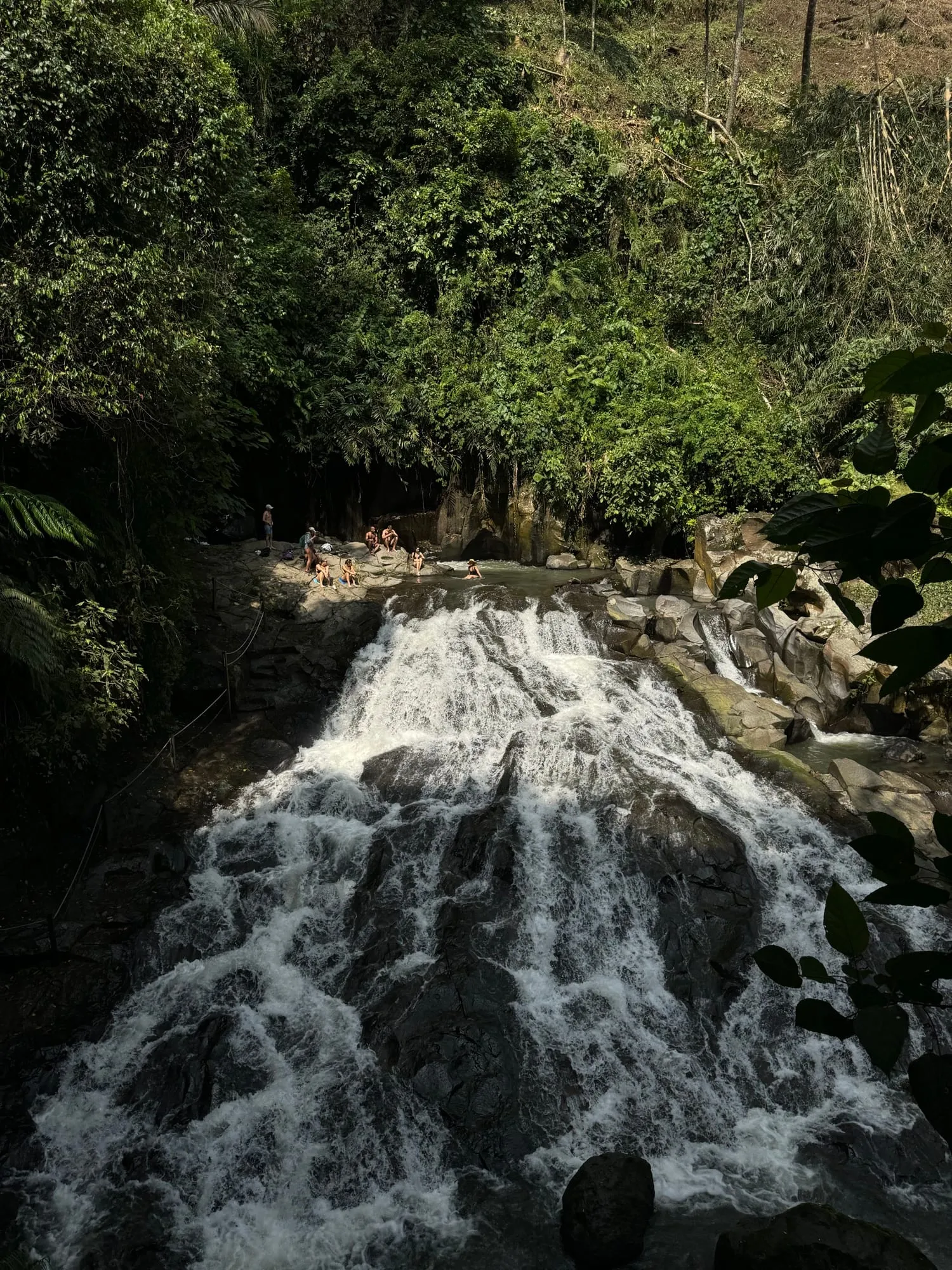
Goa Rang Reng: a wide, low waterfall rather than a tall one.
It sees far fewer people than Tegenungan or Kanto Lampo, which makes it a good last stop on a day around Ubud.
Good to know
- Getting there: around 30–40 minutes from Ubud, close to Tibumana waterfall, so you can do both.
- The walk: steps down to the river, then a short walk along the bank.
- Swimming: the pool is shallow; you can sit and stand under the edges of the falls.
Day 2: Bangli’s canyon waterfalls and Sebatu
The road through Bangli is lined with jungle swings and woven photo spots, like the one below near Tukad Cepung. If you want a photo in one, stop on the way back, when the waterfalls are done.
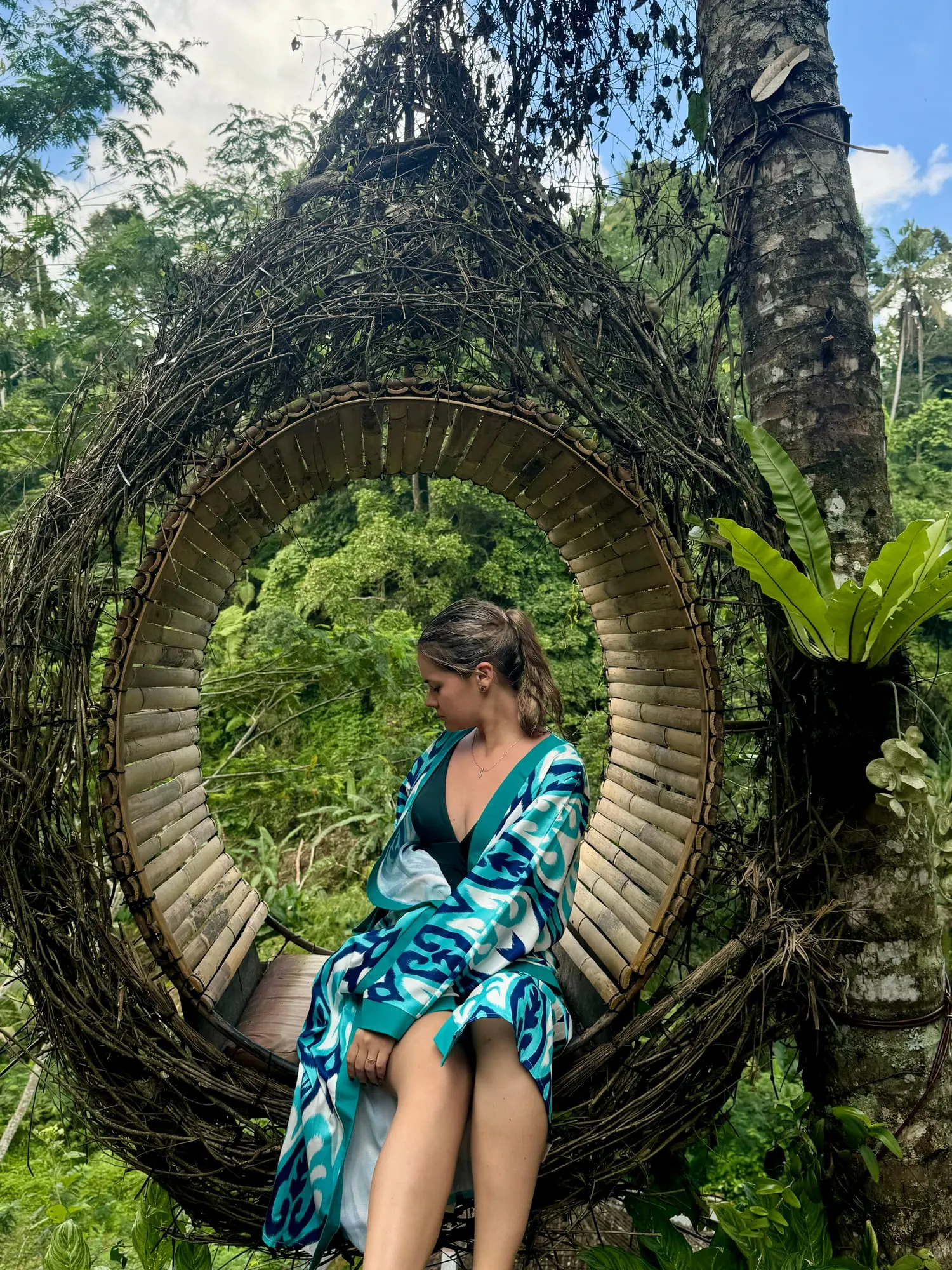
A nest swing on the road near Tukad Cepung.
4. Tukad Cepung Waterfall
If you only see one waterfall in Bali, I’d make it this one. Tukad Cepung is in Tembuku, Bangli, about an hour from Ubud. You walk down steps into a gorge, then follow a narrow, shallow river between rock walls until it opens into a round chamber. The water falls into it from a gap above, and on sunny mornings the light comes through in beams.
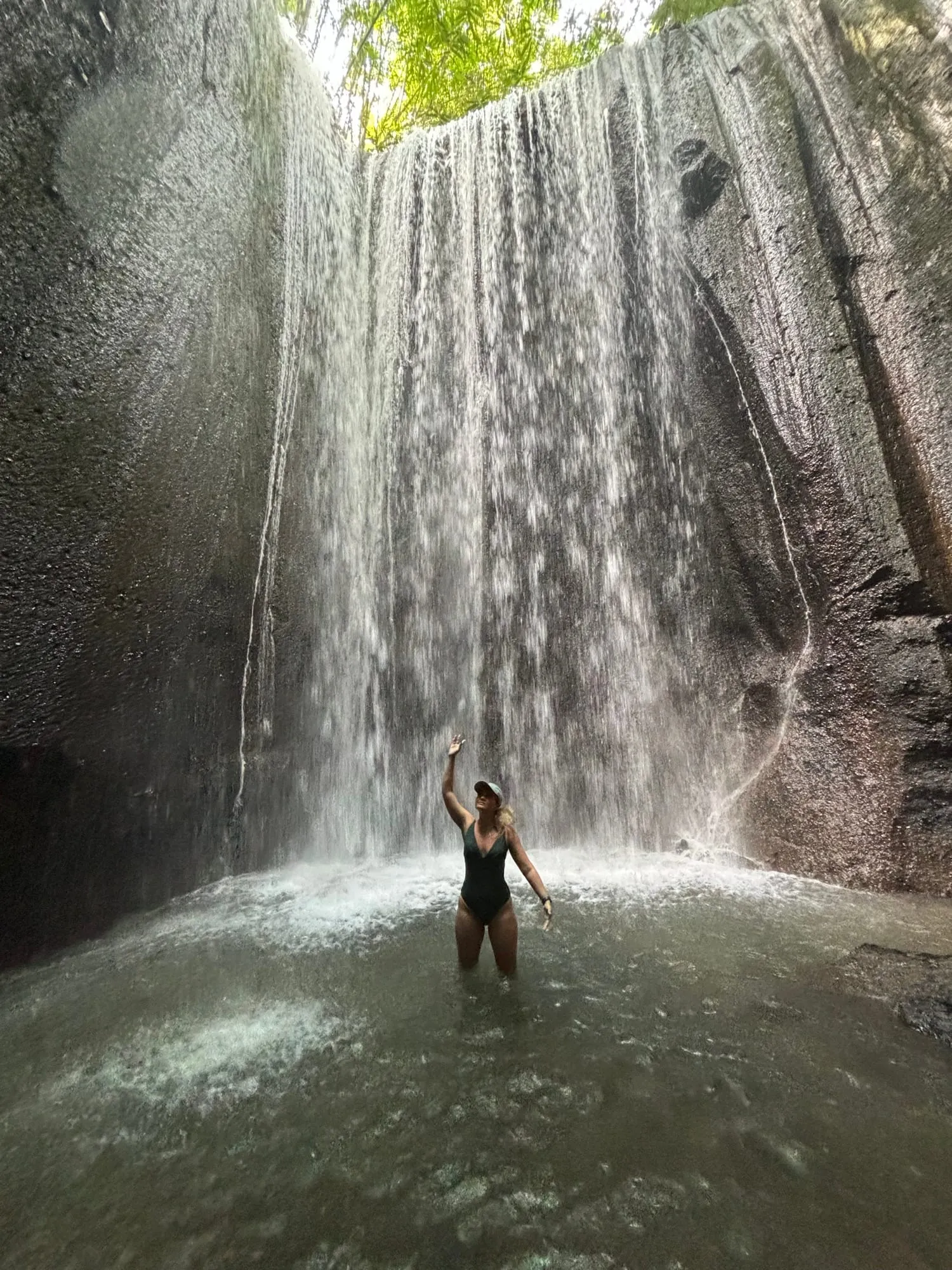
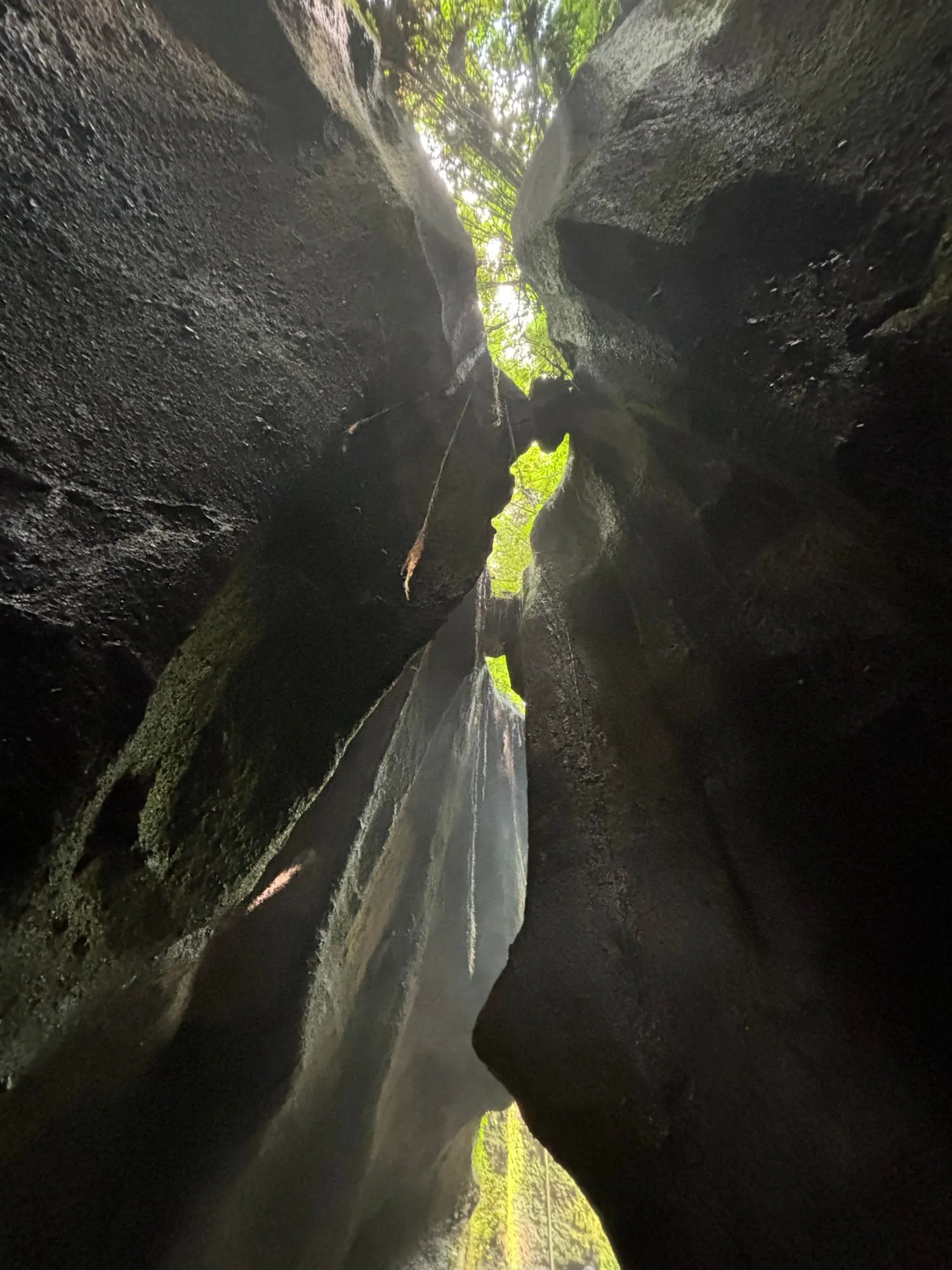
Inside the chamber, and the walls of the canyon on the way in.
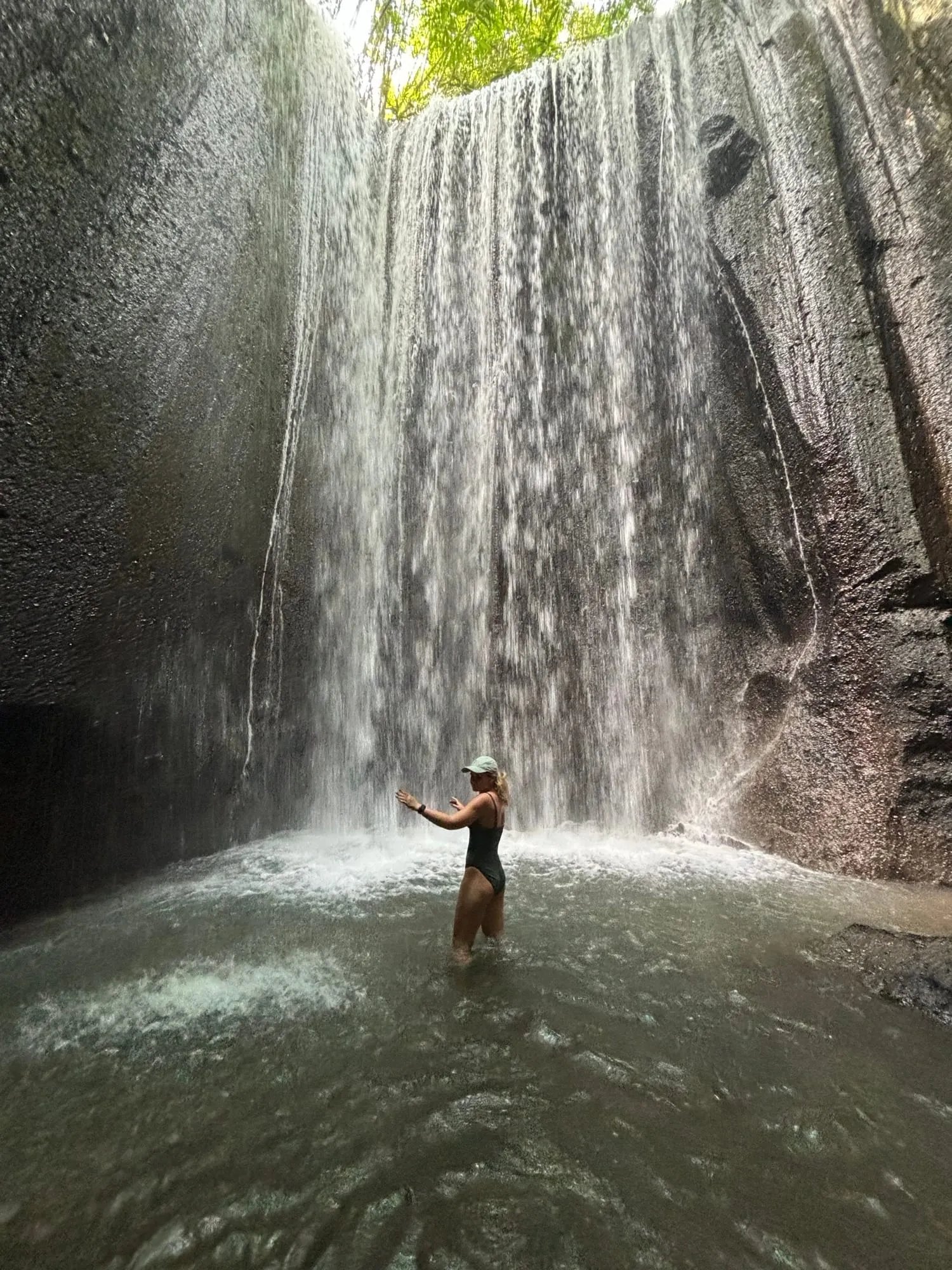
The water falls through a gap in the rock into a chamber you can stand inside.
The way in is part of the experience. You squeeze between boulders, wade through ankle- to knee-deep water and pass smaller falls in the side of the canyon before you reach the main one.
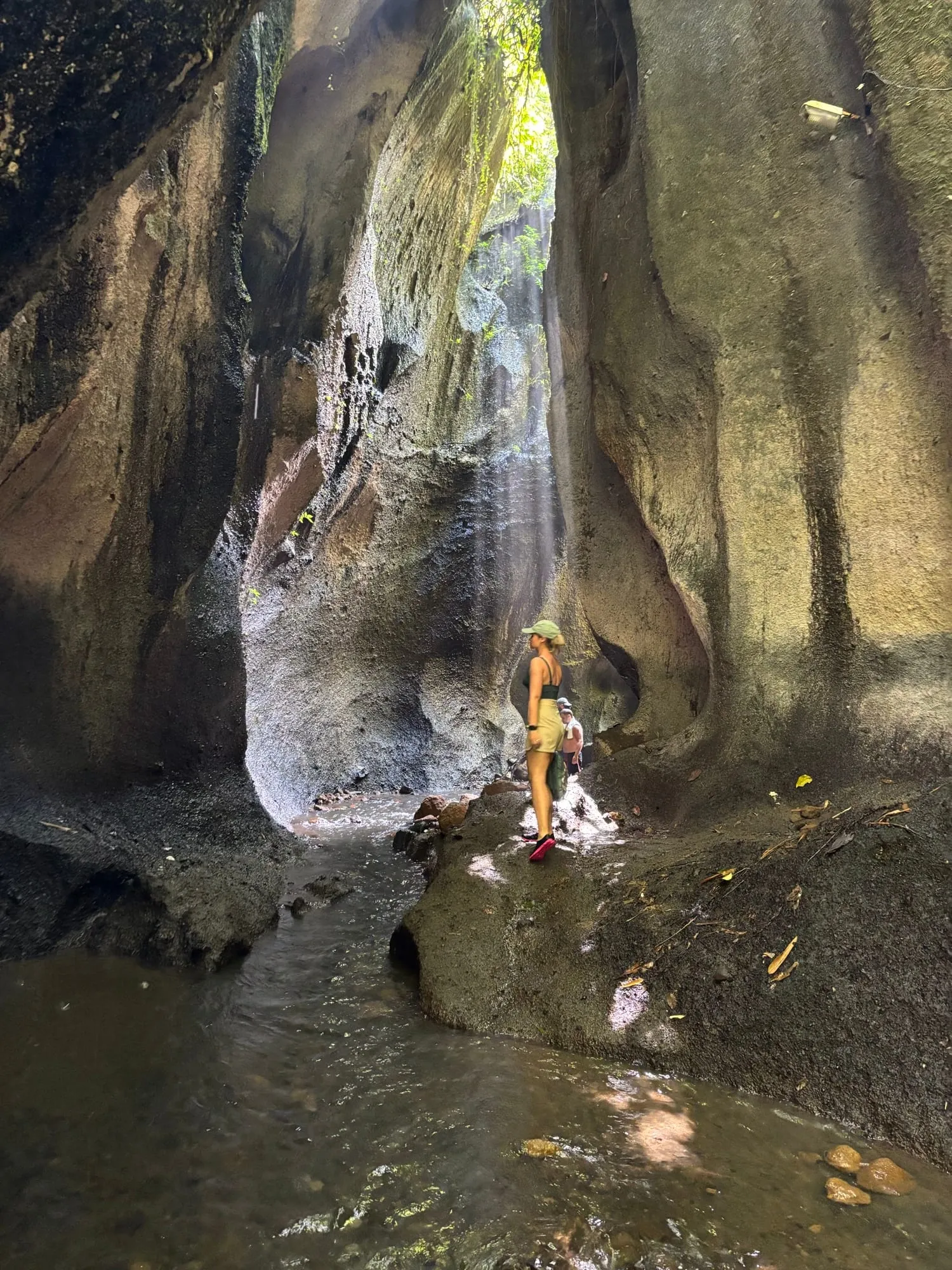
One of the smaller falls on the walk into the canyon.
Good to know
- Getting there: about an hour from Ubud.
- Light beams: they need sun, so they only appear on clear days. Mid-morning in the dry season is your best chance.
- The walk: about 15 minutes each way, steep steps then rocks and water. You will get wet.
- Wear: swimsuit under your clothes, water shoes, and a dry bag for your phone.
5. Grudugan Waterfall
Grudugan is ten minutes from Tukad Cepung in Jehem village and far less known. The local subak (the village water and rice-field association) looks after it. The best part is the approach: you walk up the river itself, between high rock walls, until it narrows to a slot you have to edge through.
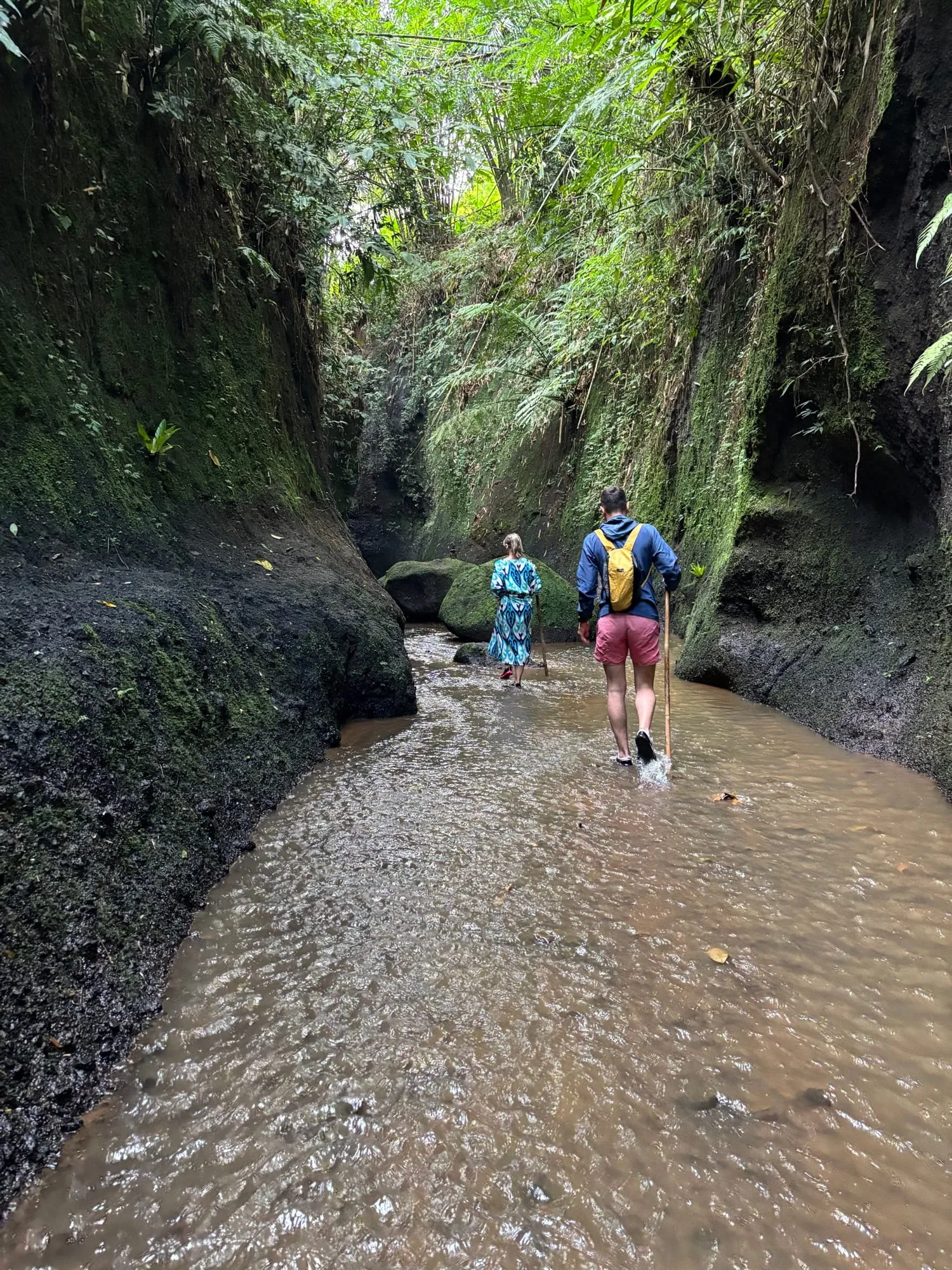
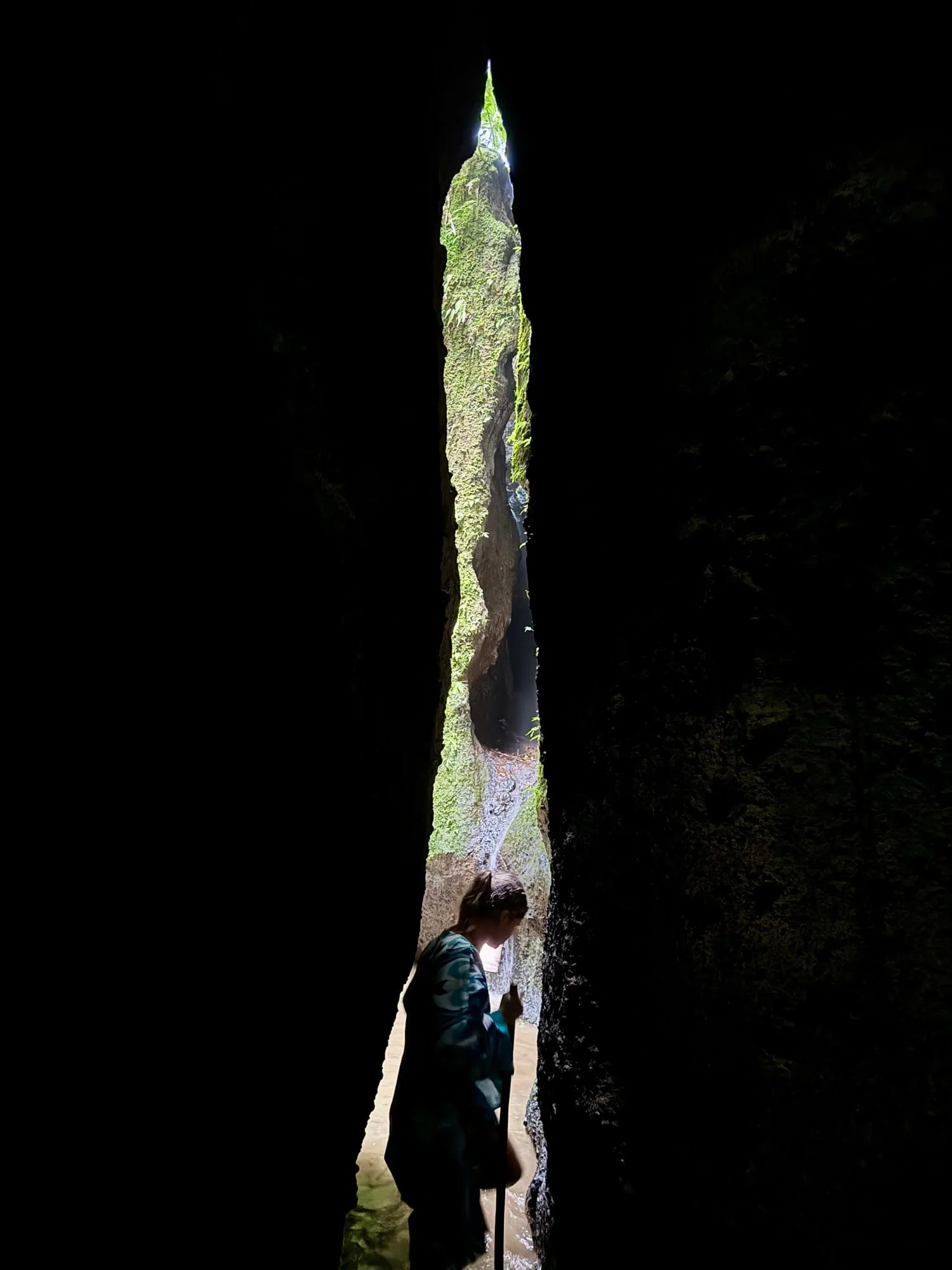
The river walk to Grudugan, and the narrow passage between the rocks.
Tukad Cepung is on every tour itinerary; Grudugan mostly isn’t, and that’s the main reason to come. Do them on the same morning: Tukad Cepung first for the light, then Grudugan.
Good to know
- Getting there: about 10 minutes by road from Tukad Cepung.
- Entrance: around IDR 20,000–25,000, paid locally.
- The walk: mostly in the water. Don’t go after heavy rain, when the river rises quickly in a narrow canyon.
6. Ulu Petanu Waterfall
Ulu Petanu is on the way back towards Ubud, near Sebatu and a few minutes from the Tirta Empul water temple. A line of stepping stones takes you across the river and up to the falls, which drop into a shallow pool between mossy walls.
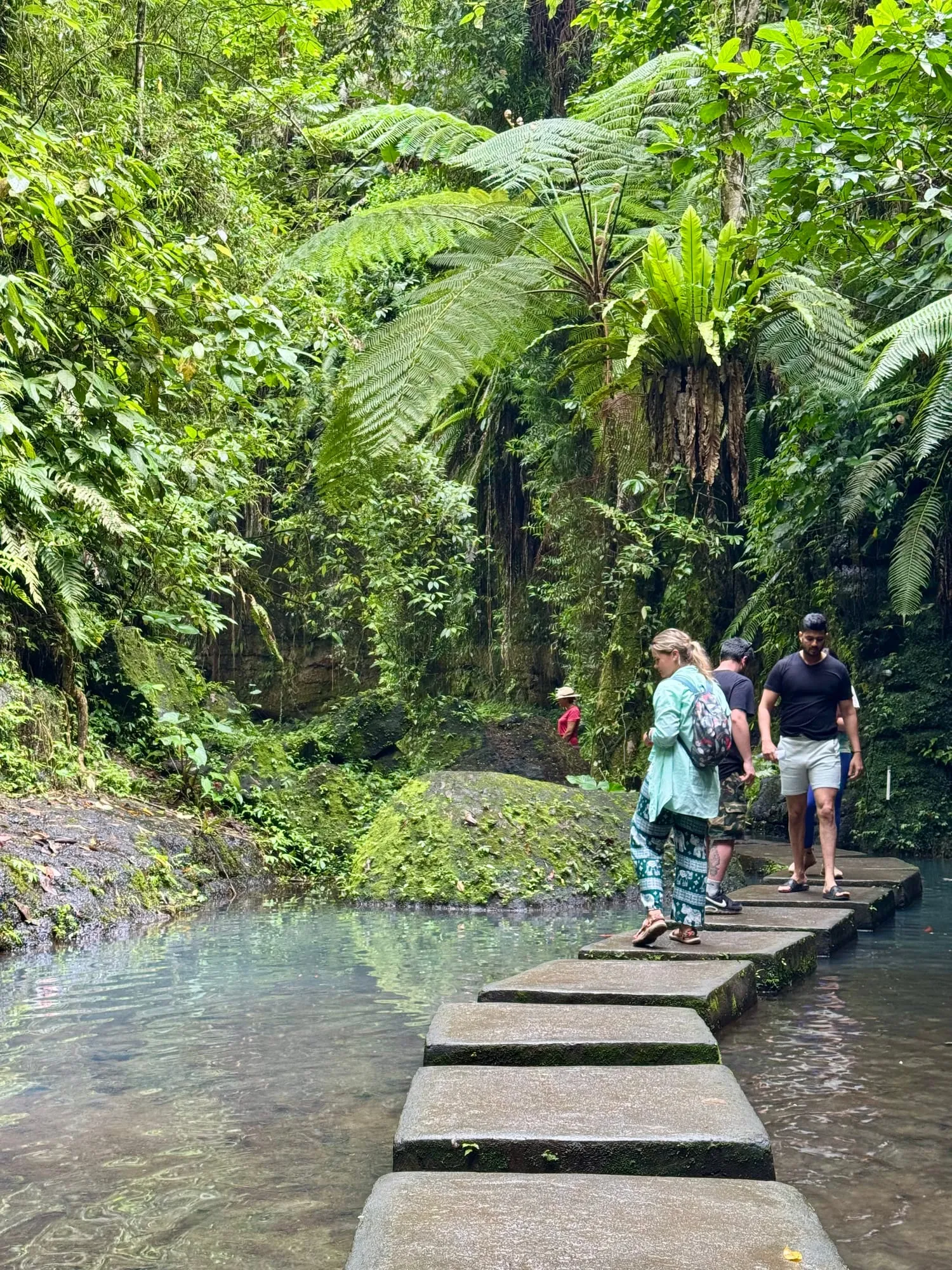
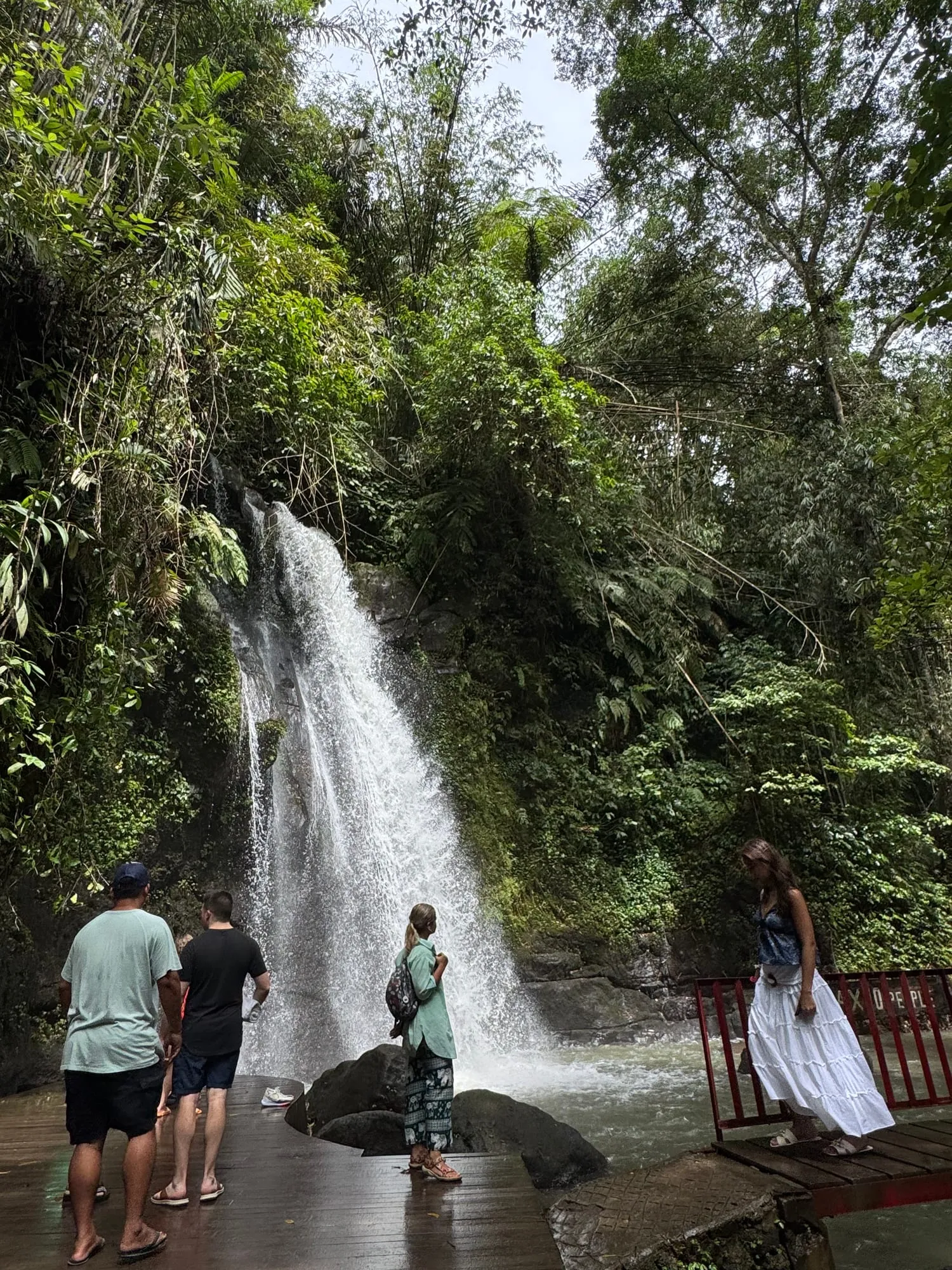
The stepping stones to Ulu Petanu, and the waterfall itself in late December.
Good to know
- Getting there: about 30 minutes north of Ubud, 5–10 minutes from Tirta Empul.
- The walk: short. The stepping stones are slippery after rain, so take it slowly.
- Combine with: Tirta Empul in the morning and the Tegallalang rice terraces on the way back to Ubud.
Day 3: The central highlands
This is the day for people who don’t mind steps. The waterfalls up here, in the hills of Petang, are higher and more powerful than those around Ubud, and they get a fraction of the visitors. Pengempu is on the way back south.
7. Nungnung Waterfall
Nungnung is one of the most powerful waterfalls I’ve seen in Bali. The water drops from a cliff into a pool with so much force that you feel the spray long before you reach the bottom, and in the rainy season it’s hard to get close at all.
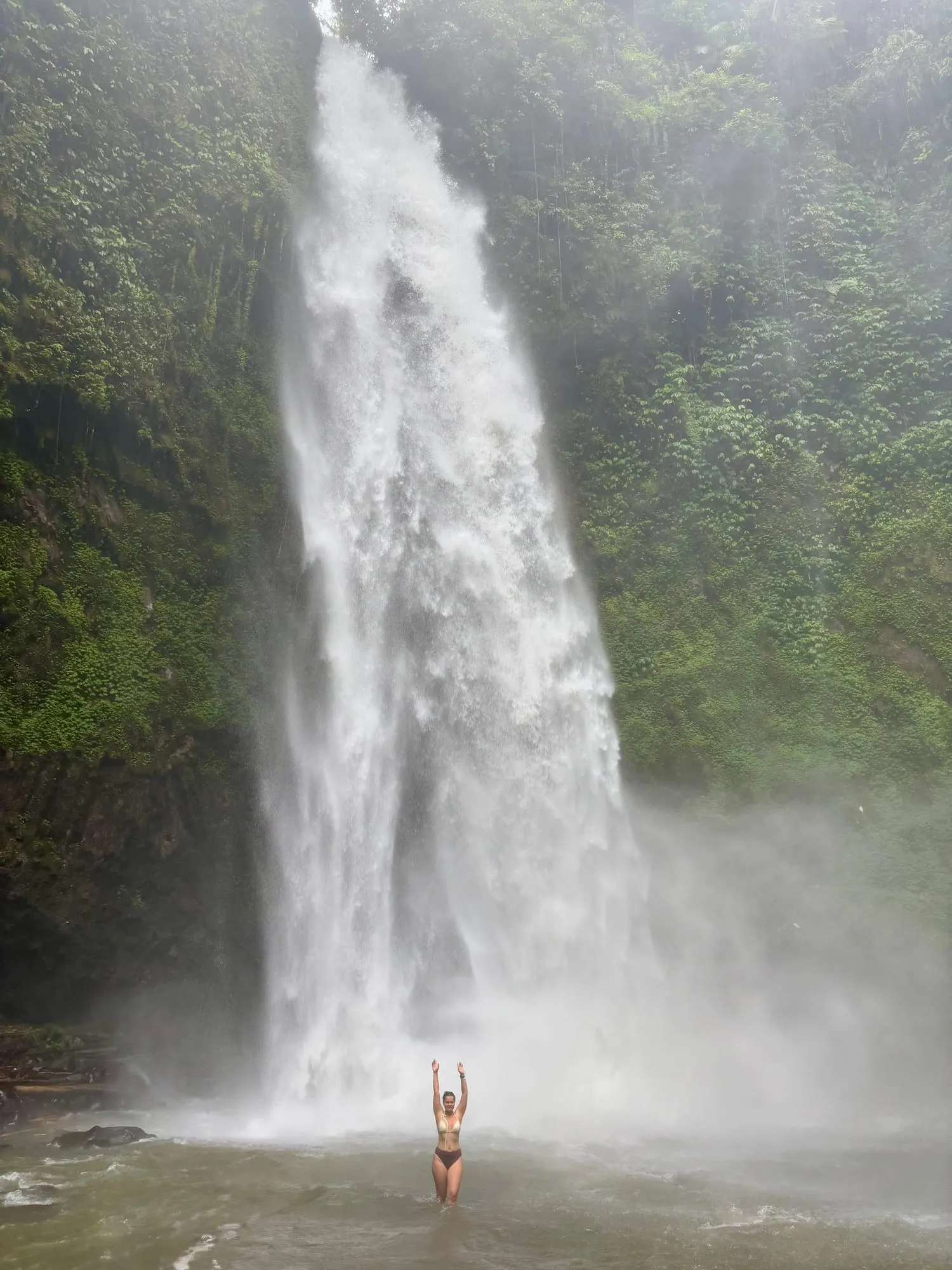
Nungnung in late December. The figure at the bottom shows the scale.
The way down is a long staircase through the jungle, past a small shrine, with a river crossing near the bottom. Going down is easy; coming back up is a proper workout, so bring water.
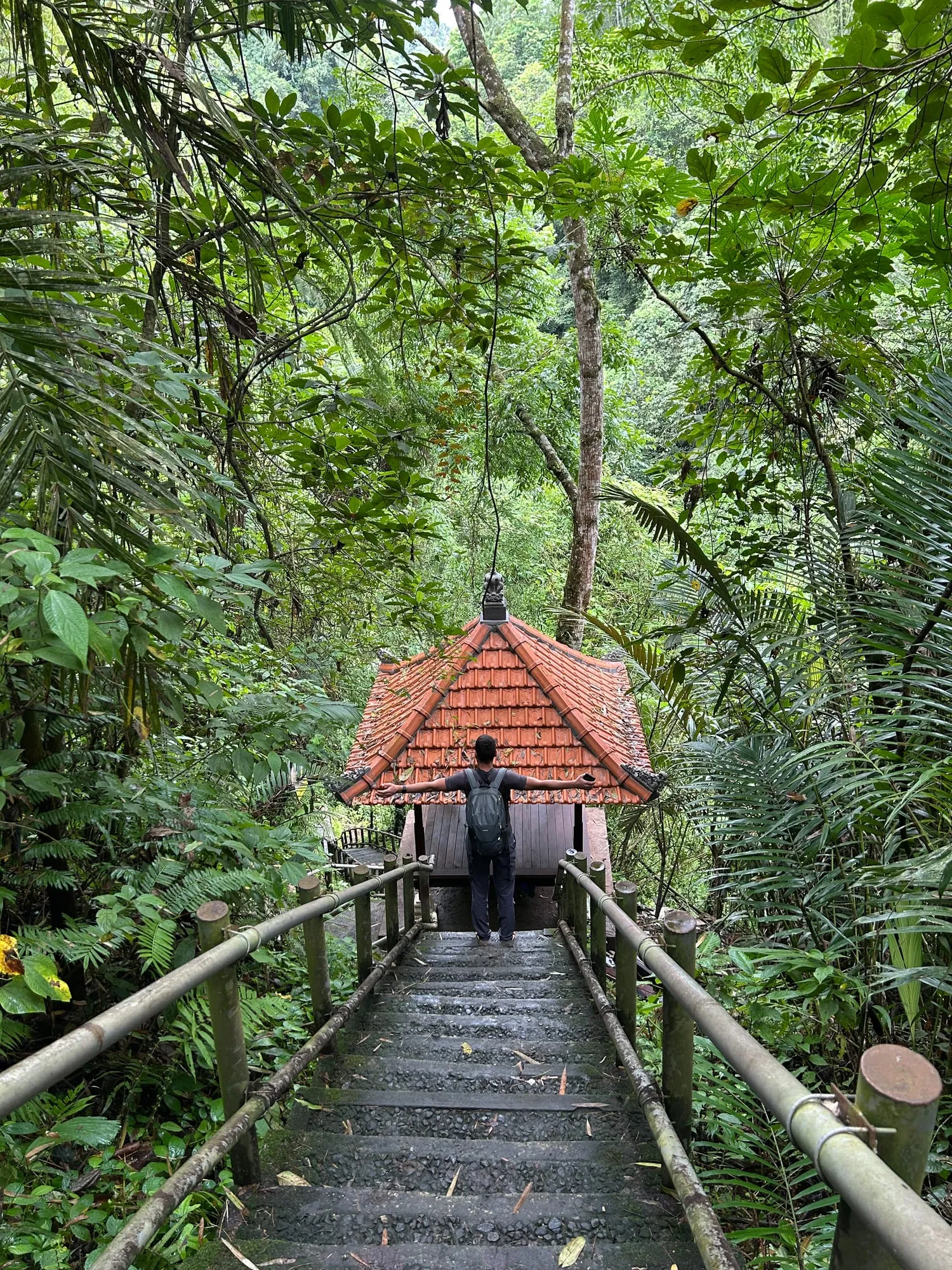
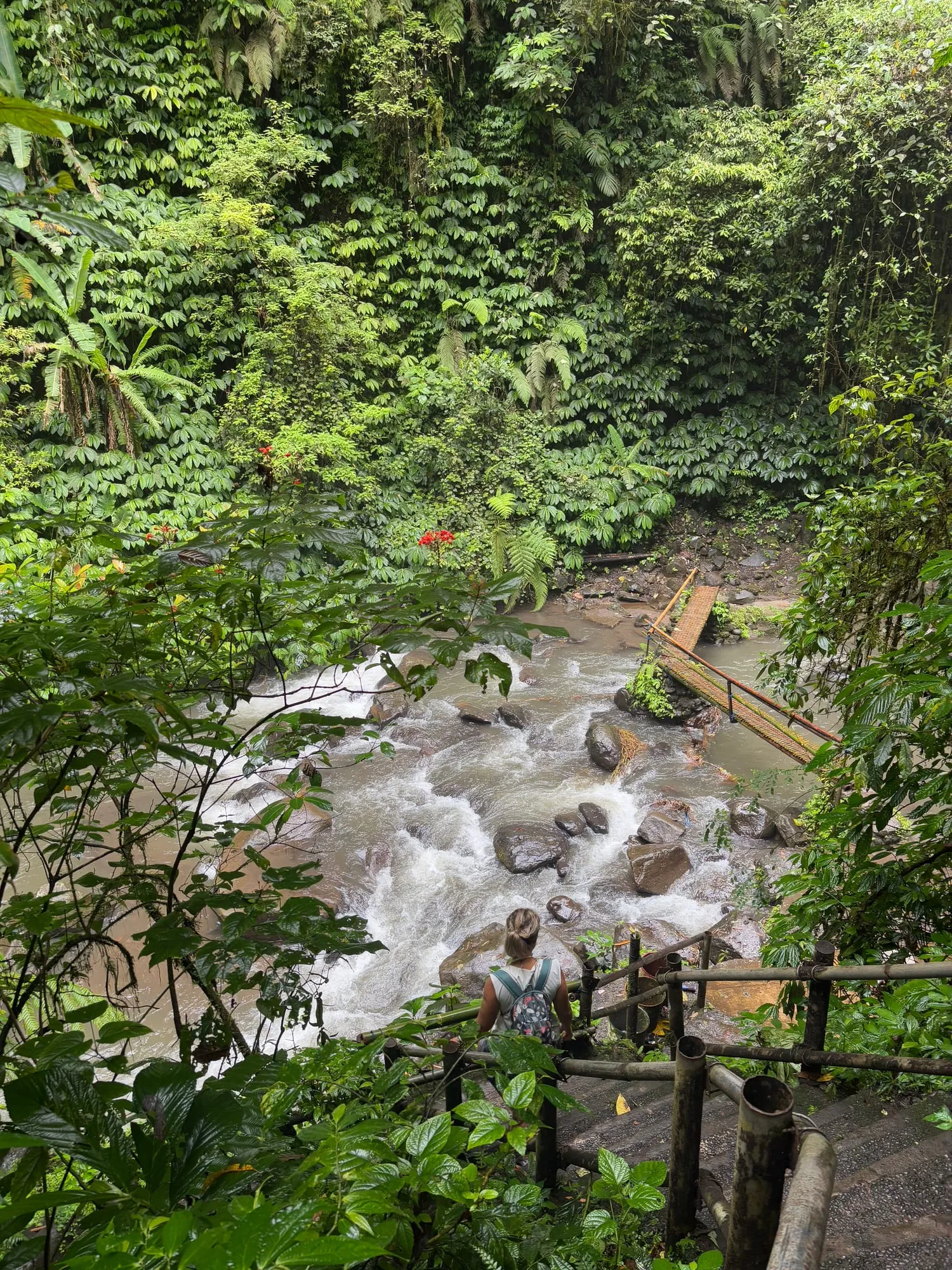
The staircase down to Nungnung and the river at the bottom.
Good to know
- Getting there: about 1–1.5 hours from Ubud or the south, in Pelaga village, Petang.
- The walk: around 500 steps each way. Allow an hour for the round trip with a stop at the bottom.
- Swimming: not really. The spray and the current at the base are too strong.
8. Batu Lantang (Goa Gong) Waterfall
A few minutes’ drive from Nungnung, in Sulangai village, Batu Lantang is the opposite: small, quiet and enclosed by green walls. Locals also call it Goa Gong. It’s a good place to stop after Nungnung’s stairs.
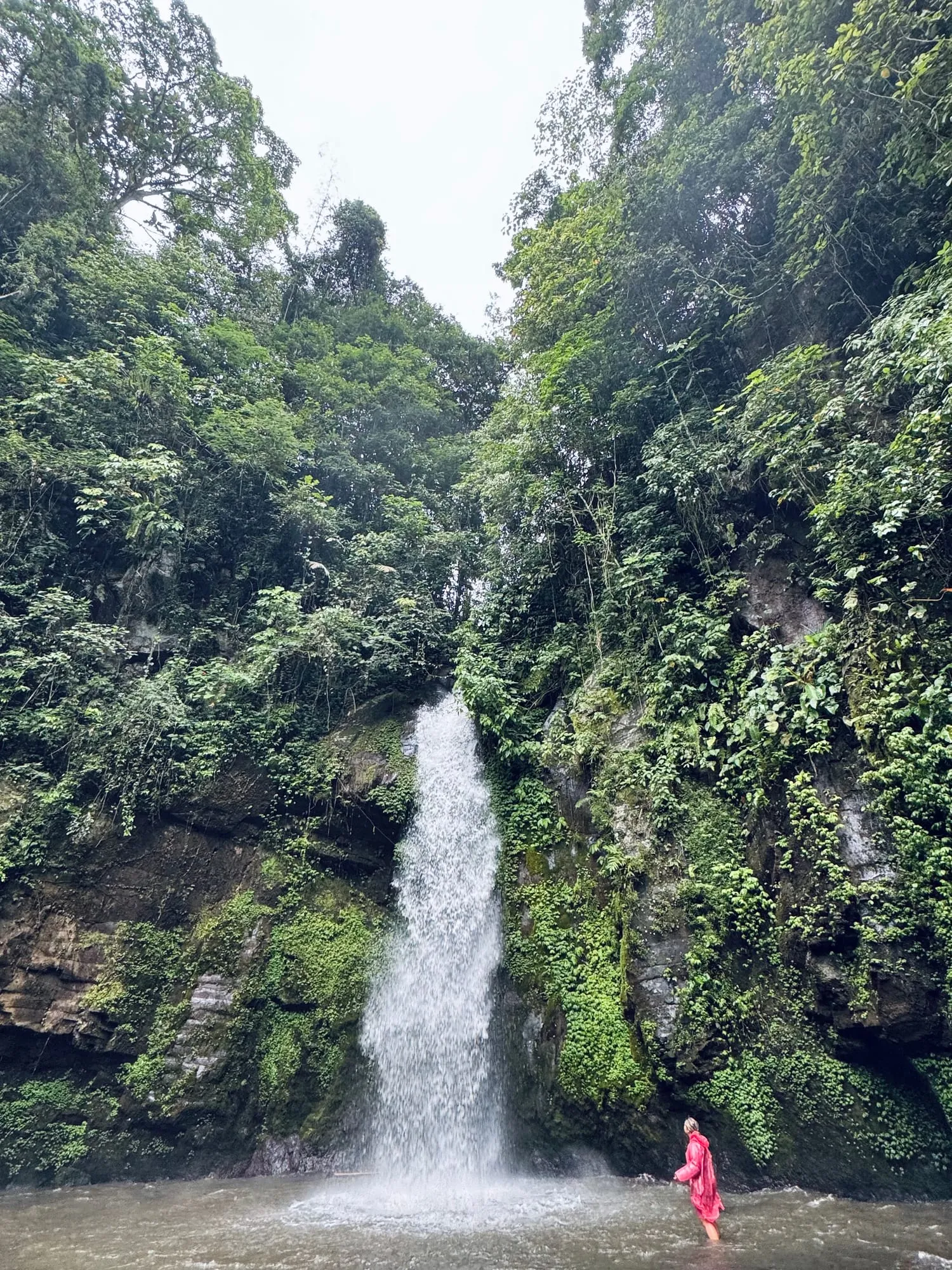
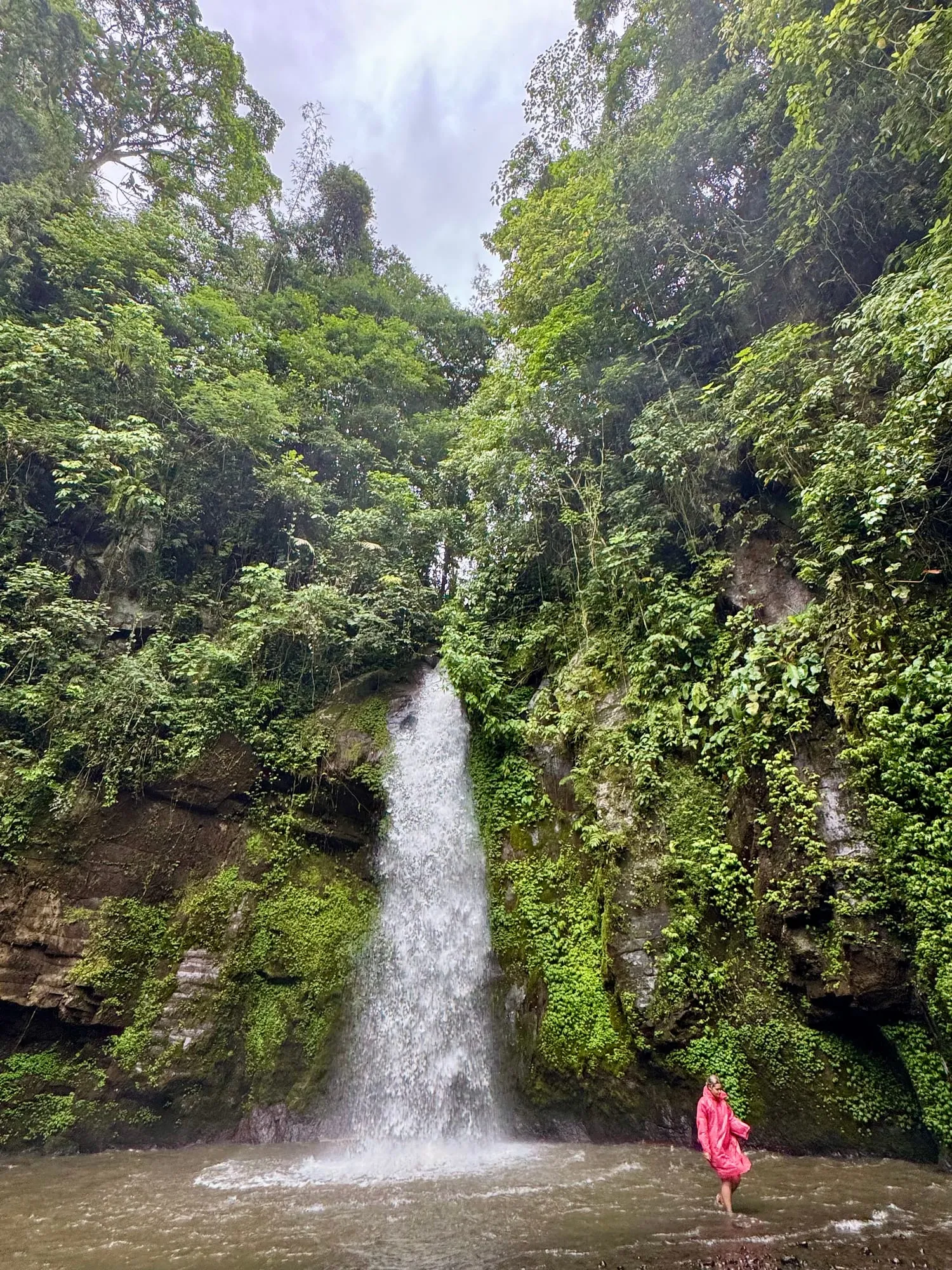
Batu Lantang on a rainy afternoon.
Good to know
- Getting there: about 10 minutes from Nungnung.
- The walk: a short, narrow path down. Muddy in the rainy season.
9. Pengempu Waterfall
Pengempu is in Cau Belayu village, on the way from the highlands back to the south. It’s a tall, thin fall at the end of a narrow, mossy gorge, and it feels much more remote than it is.
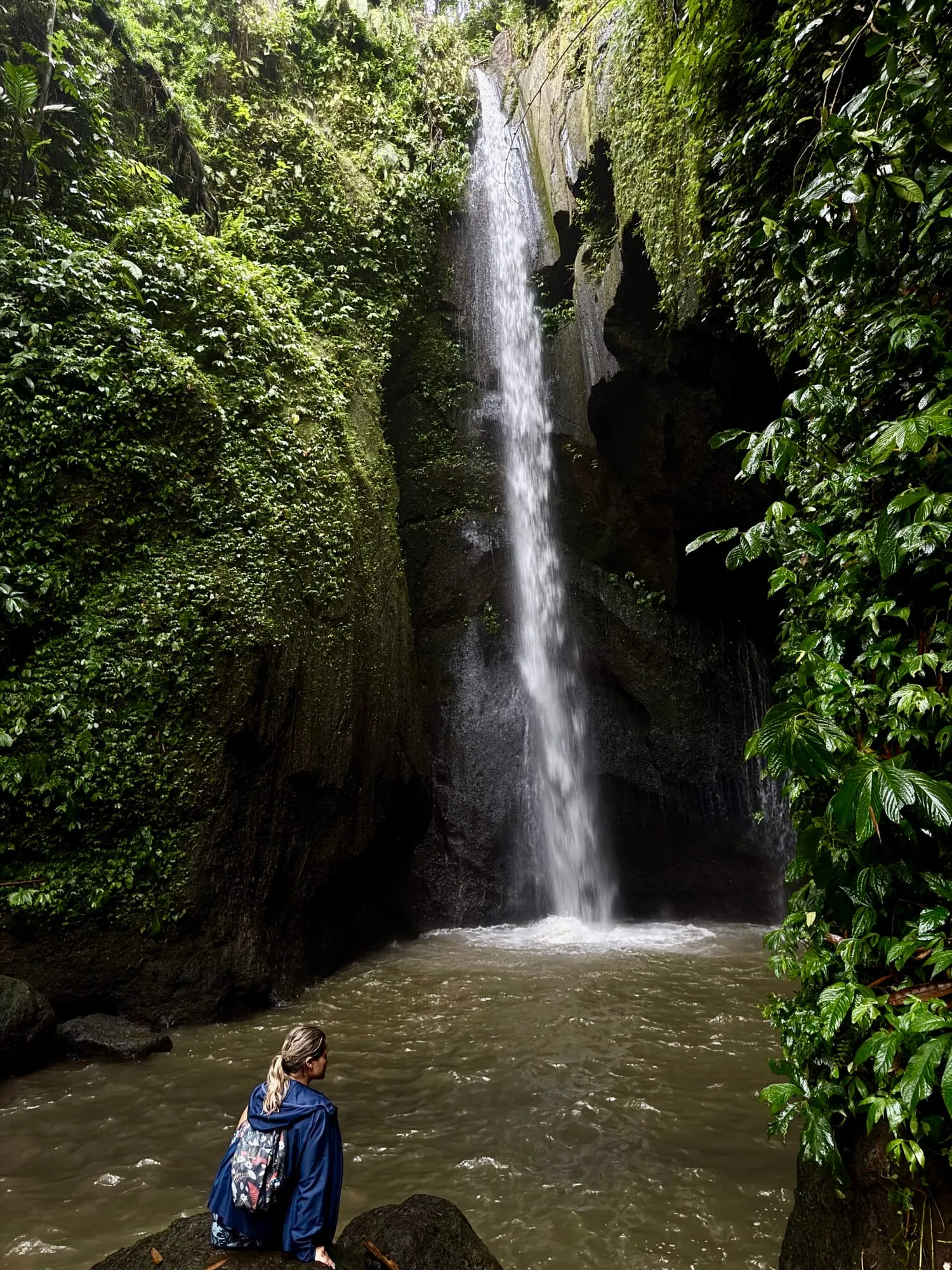
Pengempu, at the end of its gorge.
Good to know
- Getting there: about 40 minutes from Ubud, or on the way back from Nungnung.
- The walk: steps down and a short walk along the stream.
Day 4: North Bali, Sekumpul and Munduk
10. Sekumpul Waterfall
Sekumpul is often called the most impressive waterfall in Bali, and it’s the reason most people make the long drive north. It’s actually a group of falls: several tall streams side by side, dropping into a jungle valley.
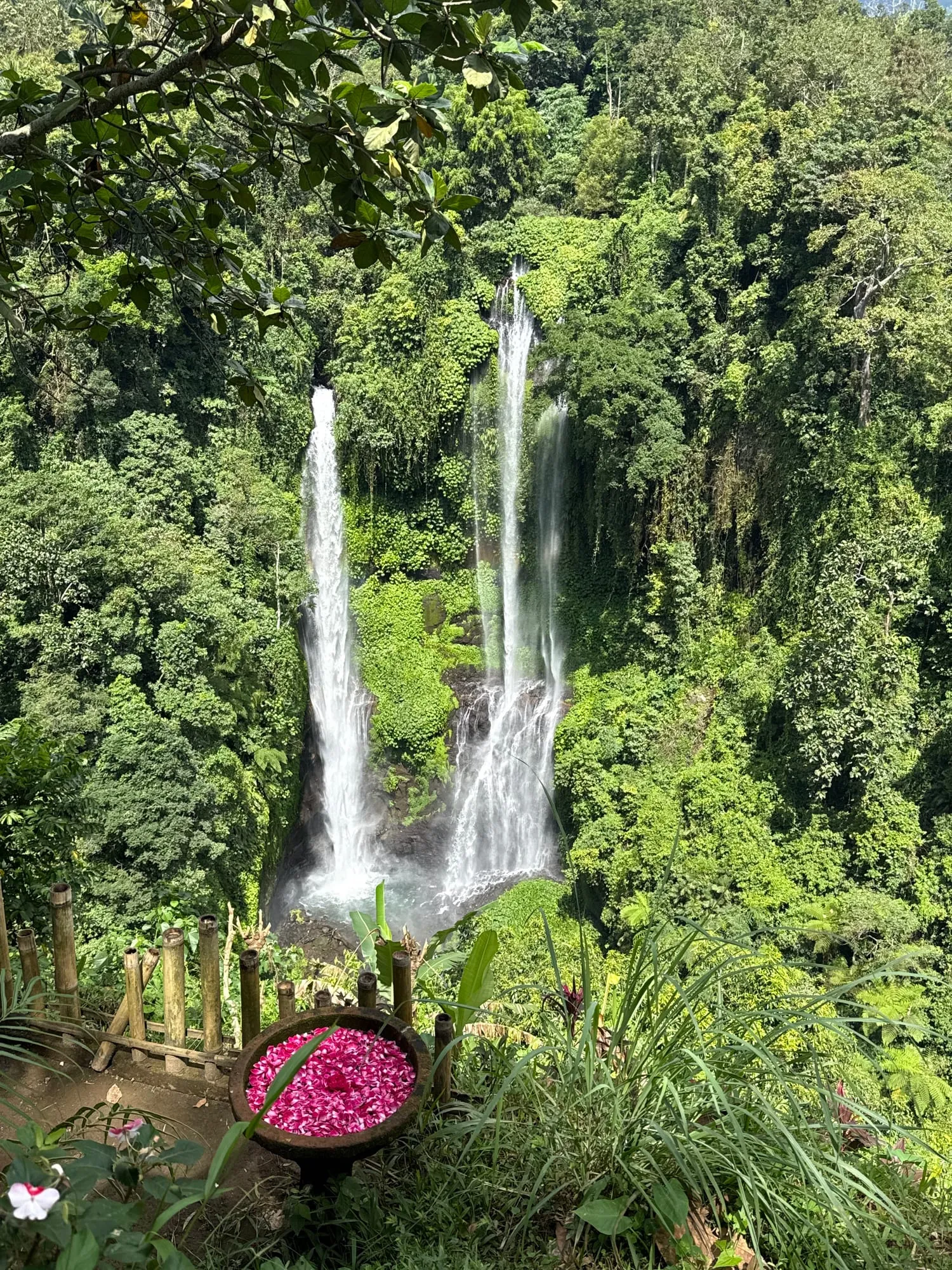
Sekumpul in May.
Good to know
- Getting there: about 2.5 hours from Ubud, 45 minutes from Munduk. Combine the two in one day or stay a night in the north.
- The walk: a lot of steps down into the valley and back up, plus river crossings. You’ll be offered a local guide at the entrance; it’s worth it for the route through the valley.
- Arrive early: tour groups from the south arrive by late morning.
11. Golden Valley Waterfall
Munduk is a village in the hills of north Bali, about 1,000 metres up. It’s cooler and greener than the south, and there are several waterfalls within walking distance of each other, linked by forest trails and coffee and clove plantations. Golden Valley is one of them: tall, with the water fanning out over a dark rock face.
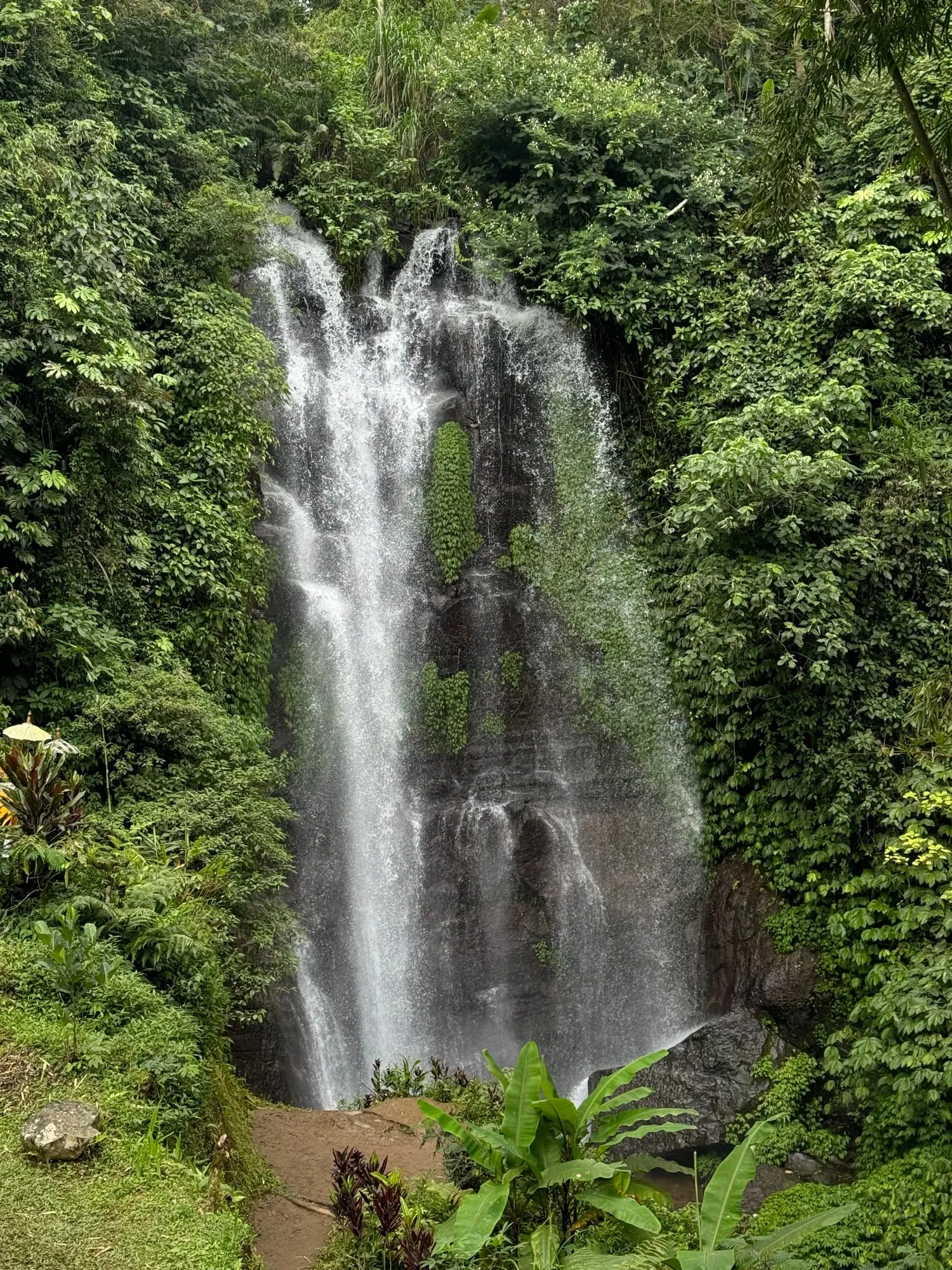
Golden Valley waterfall on the Munduk trail.
The Munduk waterfall trail
The trail between the waterfalls is the reason to come. You can walk from one to the next in a few hours, and each has its own small entrance fee. Some you look at from a viewing platform; others you walk down to.
On the drive up, stop at the viewpoint above the twin lakes, Buyan and Tamblingan.
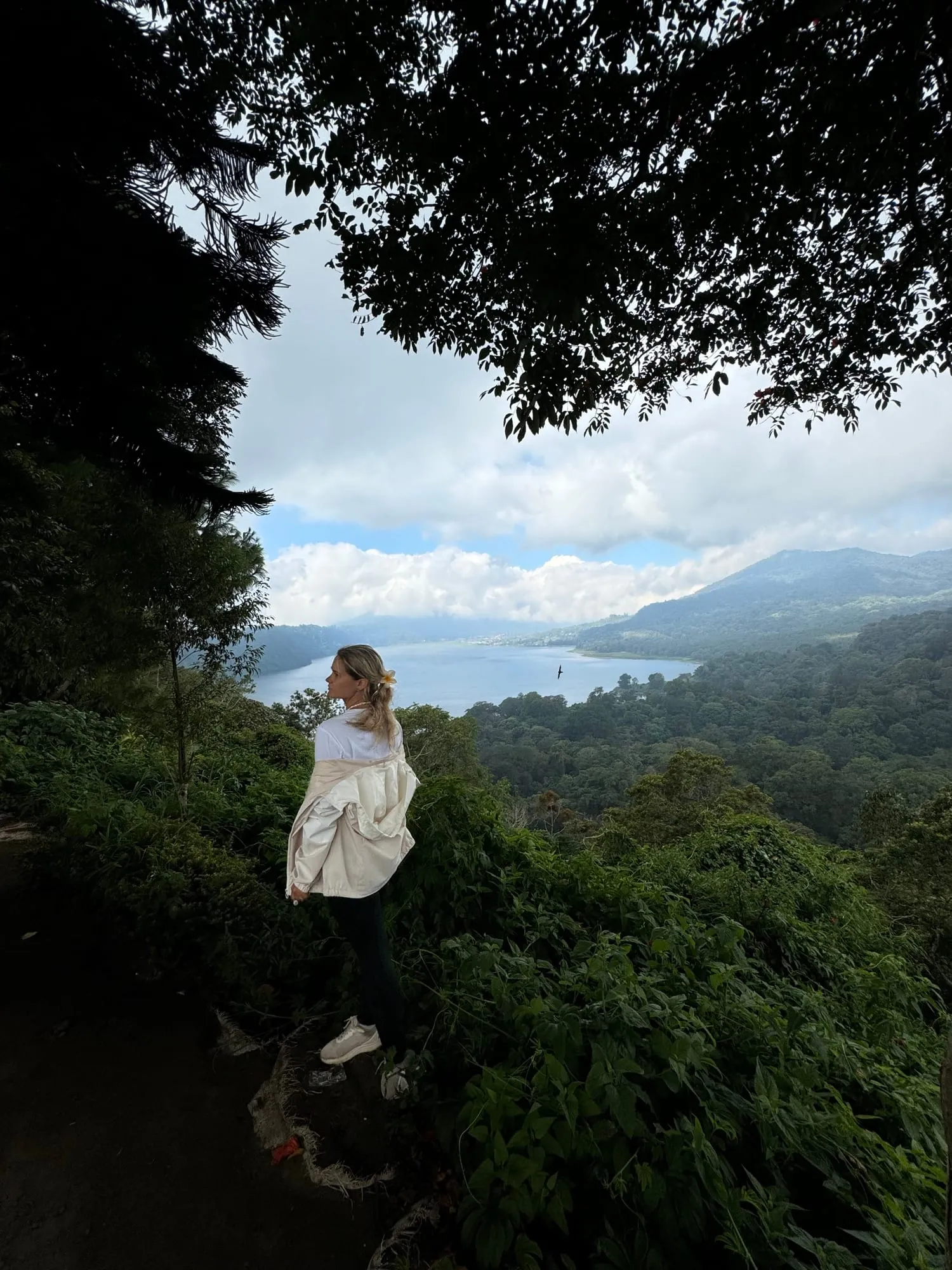
The twin lakes viewpoint on the road to Munduk.
Good to know
- Getting there: about 2.5 hours from Ubud or the south. Leave early or stay a night in Munduk.
- Weather: clouds come in by early afternoon. Bring a light jacket; it’s noticeably cooler up here.
- The walk: paths can be muddy and steep. Trainers with grip are better than sandals.
More Bali waterfalls worth knowing about
I don’t have photos from these, but they come up in every conversation about Bali waterfalls, so here’s what to expect:
- Tibumana (Gianyar): a single curtain of water into a round pool, with a short, mostly flat walk. It’s next to Goa Rang Reng, so it fits Day 1.
- Banyumala Twin Waterfalls (north Bali): near Wanagiri, above Lake Buyan. Two streams fall side by side into a pool where you can swim. Fits Day 4.
- Leke Leke (Tabanan): a thin, tall fall reached by a jungle path and a bamboo bridge, about 30 minutes from Bedugul. Fits Day 3 or Day 4.
Tips for visiting Bali’s waterfalls
- Go early. Before 9am is the difference between an empty pool and a queue for photos. The light is softer too.
- Dry season is easier. From April to October the paths are safer and the water clearer. In the rainy season (I went in late December) the falls are bigger and louder, but the steps are muddy, the rivers turn brown and some canyon walks close after heavy rain. A raincoat is more useful than an umbrella.
- Wear the right shoes. Water shoes or sport sandals for the canyon waterfalls (Tukad Cepung, Grudugan, Kanto Lampo); trainers with grip for Munduk.
- Swimsuit under your clothes. Changing rooms are basic or missing. A quick-dry towel and a dry bag for your phone help.
- Cash. Entrance fees, parking and toilets are paid in small notes. There’s rarely a card machine.
- Respect temples. Many waterfalls have a shrine or spring temple nearby. Cover your shoulders and knees there, and wear a sarong for rituals like melukat.
- Hire a driver for the day. Roads between the waterfalls are narrow and steep, and parking is easier with a driver. Agree the route and the price before you set off.
If you have a spare day, the cliffs and beaches of Nusa Penida are a 40-minute boat ride away. Here’s how to do a Nusa Penida day trip without missing the last boat.
- Best time
- Dry season (April–October). Arrive before 9am to have the pools mostly to yourself.
- Entrance fees
- Usually IDR 20,000–50,000 per waterfall, cash only. Bring small notes for parking.
- Getting around
- A driver for the day (roughly IDR 600,000–800,000) or a scooter if you're confident on hills.